Tenerife Nature and Wildlife: What Really Lives on the Island?
2026. November 9., Monday, 08:00
Are there any dangerous animals in Tenerife, and is there anything you should particularly watch out for? In this guide we walk through the island's flora and fauna: from Canary mastiffs and native giant lizards to cockroaches, orcas and flying fish, and from the Canary pine and the dragon tree to the laurel forests of Anaga, with plenty of local PRO tips.
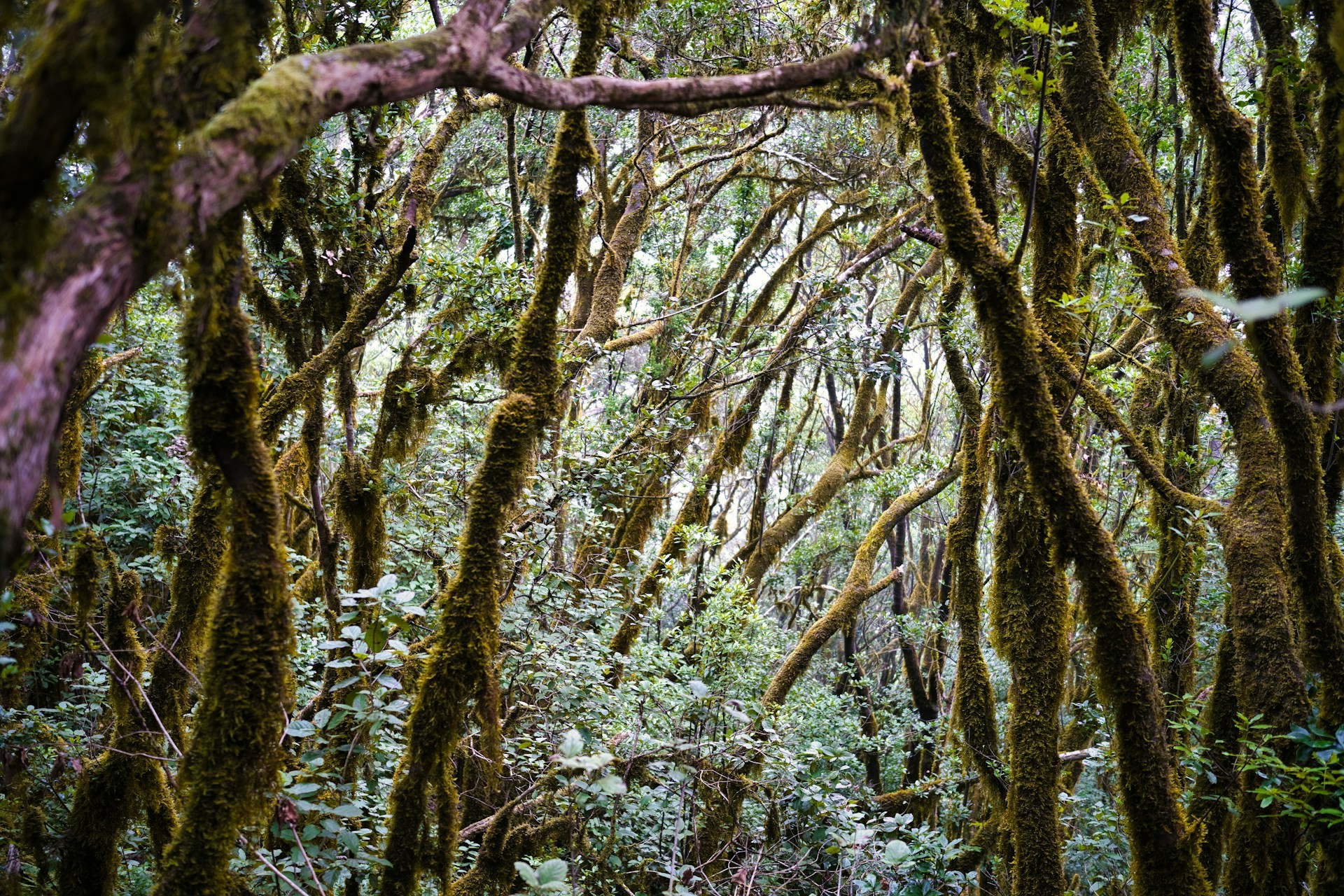
A moss-covered laurel forest (laurisilva) in the north of Tenerife. These ancient, misty forests survive at their most beautiful in the Anaga mountains, and for us this is where the real Tenerife shows itself.⏐Fotó: Unsplash, Maksim Shutov
Planning a trip to Tenerife and wondering whether there are any dangerous animals here, or anything in particular you should watch out for? Good news: when it comes to wildlife, the island is one of the most relaxed places in Europe. In this guide, as a local team, we show you what really lives in Tenerife on land, in the air and in the ocean, and which special plants are worth seeing while you're here. For the basics about the island, read Tenerife as a Destination: Everything You Need to Know.
In short: what to expect
Dangerous animals: there are no animals in Tenerife that are dangerous to humans, not on land, not in the water and not in the air.
Insects: mosquitoes, flies and wasps are rare; at most, the calima brings a few over from Africa.
Cockroaches: you may see some in summer and autumn, but they're completely harmless.
On the road: watch out for wild rabbits, dogs and cats.
In the ocean: dangerous sharks are extremely rare near the coast, and jellyfish mostly appear on the east coast in autumn.
Plants: the milky sap of the Canary Island spurge is poisonous, so don't taste it.
Where did the Canary Islands get their name?
Let's start with a fun fact. Where do you think the Canary Islands got their name? Most people assume it's from the canary bird, but it's actually the other way round: the bird was named after the islands. The Latin name, Canariae Insulae, means "the islands of dogs". The native dog breed here is the Perro de Presa Canario, or Canary Mastiff, a strong, powerful fighting dog.
Three fascinating facts from the island's past
Giant animals: around 100,000 years ago, giant turtles, giant rats and giant lizards lived on the island, each about 1 m (3.3 ft) long. You can see their real skeletons and remains at the Museum of Nature and Archaeology (MUNA) in the capital, Santa Cruz de Tenerife.
The cochineal business: in the 1800s, Tenerife started farming cochineal insects. To do so, huge numbers of prickly pear cacti were brought over from South and Central America, because they are ideal for breeding these insects. A red dye is extracted from the insect's body: crush one on your hand and it leaves a red smear. It's still used in the food industry today, and you'll find it on labels as E120.
Bullfights: between 1893 and 1984, bullfights were held in Tenerife, mainly in the capital, where a beautiful bullring was built for them. They were permanently banned in the Canary Islands in 1991.
Read more about the island's story, from the Guanches to the present day, in The History of Tenerife.
Dangerous animals? There aren't any
So what's the situation today? There are no animals in Tenerife that are dangerous to humans, not in the water, not on land and not in the air. Mosquitoes, flies and wasps are rare too, and there's really nothing that could disturb your peace.
The exception is when the calima arrives, the dusty, hot wind from Africa that we explain in detail in our article on Tenerife's weather. It can bring a few flies, wasps or mosquitoes with it, but they usually die off within 2 to 5 days. In summer you may also come across moths in Teide National Park, and at night around Teno and Anaga.
Parrots over your head
It's by no means unusual to see parrots flying over your head while you're on holiday here. These birds live here with us completely free, in the parks and among the palm trees.
Animals on the road: what to watch out for when driving
You don't need to worry about a large wild animal suddenly jumping out in front of your rental car or motorbike. You might occasionally come across a few goats or sheep on the roads, but they're no danger either, because you'll only meet them on stretches where you're driving very slowly anyway.
There are basically three animals you need to watch out for when driving: wild rabbits, which you'll find all over the island, and dogs and cats. Please look out for them and take care of them while you're here.
Today, the land-based wildlife is mostly made up of goats and sheep. Just as Cyprus is the island of cats, Tenerife is more the island of dogs: you'll see cats much less often here.
Lizards, geckos and giant lizards
There are plenty of lizards and geckos, though. The most interesting is Gallotia galloti, which lives only in the Canary Islands and is mostly found in Teide National Park. The males have a pretty bluish throat, and they can grow up to 25-30 cm (10-12 in). In the tourist areas, around the hotels, you'll mostly see smaller geckos and lizards, but even that is fairly rare.
Few people know that giant lizards live on the island too. Gallotia intermedia can grow up to around half a meter (1.6 ft) long, and it lives mainly in Teno Rural Park and other remote places, well away from people.
Cockroaches: ugly, but harmless
You may get to know some cockroaches, though, mostly in summer and autumn. They exist all over the world, in London too, so it's nothing unusual to run into a larger one here. They're simply part of the island.
Cockroaches are harmless. They don't look great, but they don't bite, they don't jump at you and they don't fly into your eyes. They're not even very good at flying: none of them is Tom Cruise. So there's no need to be afraid of them.
PRO tip: if you can, sleep with the windows closed. In summer, especially without air conditioning, that's not always easy, but cockroaches are active at night and can easily wander into your room, and then you end up chasing them. If there's a mosquito net (which is rare), close it, so the room can still get some air.
Mice and rats live on the island as well, but we don't think you'll really run into them: we've maybe seen one ourselves in the past year.
Blue chaffinches, wild rabbits and bees
One of Tenerife's most typical animals is the blue chaffinch (Fringilla teydea), a tiny and incredibly cute little bird that you can mostly spot in the pine forests around Teide National Park. We've already mentioned the wild rabbits: there are plenty of them, but you still need a bit of luck to actually see one while you're on holiday.
Bees are highly valued in Tenerife, just as they are all over the world, and there are lots of them on the island. One special treat you should definitely try is palm honey (miel de palma), which is actually a delicious syrup made from the sap of the Canary Island date palm. It's often served drizzled over goat cheese, and it's simply divine. We'll be writing a separate article about local food and drinks soon.
Life in and around the ocean
Near the water you'll come across two typical birds. One is the seagull, which is almost everywhere near salt water. The other is the osprey: watching it cruise over the water and then pluck a fish straight out of the ocean is an amazing sight. If you go whale watching or on any other boat trip, you'll almost certainly see one.
Sharks and orcas
Not far off the coast, the ocean around Tenerife is already 1-2 km (3,300-6,600 ft) deep. But you don't need to worry about sharks: the great whites that eat surfers and tourists in the movies aren't found here. Several smaller shark species live in Tenerife's waters, but encounters with dangerous sharks close to the coast are extremely rare.
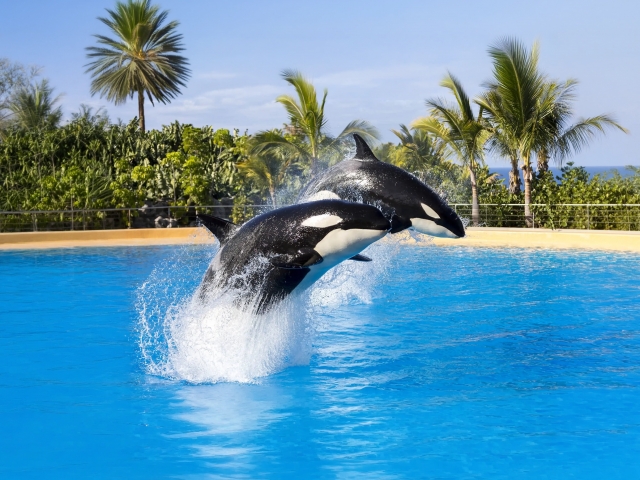
Killer whales, or orcas, also occur around the Canary Islands. Orcas are apex predators: in some parts of the world they attack great white sharks, tear out their nutrient-rich livers and kill them that way. There are several scientific theories about why they do it. What we do know is that the liver is extremely rich in fat and nutrients, and that the mere presence of orcas can scare larger sharks away from an area. Orcas are a bit like the velociraptors in Jurassic Park: incredibly intelligent, they hunt in packs, work as a team and can bring down prey much larger than themselves.
We've talked a lot with local boat captains and have been on plenty of boat trips and private boat tours. Every single one of them told us that the orca is a far more human-friendly animal than the dolphin: dolphins can be unpredictable and capable of a surprise or two, while the orca is man's best friend in the water.
Loro Parque: orcas up close
If you visit Loro Parque in Puerto de la Cruz, which TripAdvisor once named the best zoo in the world, you can meet orcas there. The orca show is definitely worth seeing: it really is a once-in-a-lifetime experience.
Jellyfish
People often ask us about jellyfish. They usually appear on the east coast, mostly in autumn, so in the tourist areas you don't really need to worry about them. There are no deadly jellyfish around here, only the kind that might be worth a trip to the emergency clinic.
Out on the open ocean: whales, dolphins, turtles and flying fish
We definitely recommend going out on the open ocean by boat to watch whales and dolphins: it's an awesome experience. Pilot whales and bottlenose dolphins live in the waters between Tenerife and La Gomera all year round, so there's a good chance you'll see them. On these trips you might also come across loggerhead sea turtles.
On the east coast, if you go jet skiing or do any other water sport, you can often see flying fish: it has happened to us several times that these bluish fish were flying right alongside the jet ski. It's an unexpected and amazing experience, so there's plenty of adventure on the water.
Loro Parque, regarded as the best zoo in the world, is no ordinary zoo: it brings together more than 400 animal species, an Antarctic habitat with real snow, the world's largest coral reef outside the ocean and world-famous animal presentations in an unrivalled full-day experience.
If you like diving, the marine life here in the Atlantic is simply mind-blowing. If fishing is your thing, the fish you can go for changes with the season, but the deep-sea fishing here is absolutely awesome: this part of the Atlantic is full of tuna, and there's swordfish too.
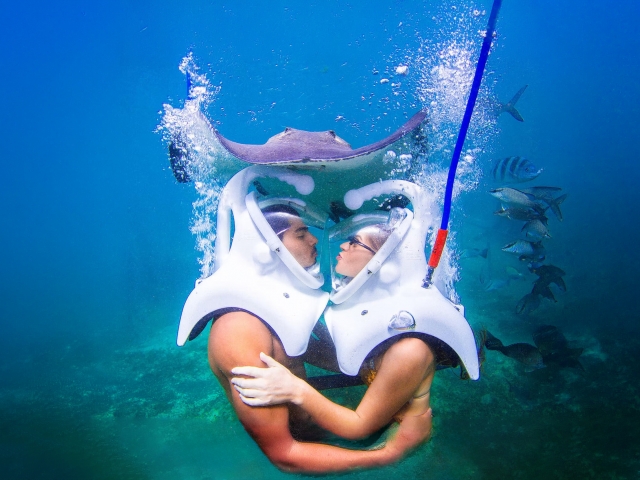
If diving isn't for you, because you don't want to take any risks or it's simply not your kind of sport, there's the submarine. You'll spend a net 35 to 40 minutes down at around 30 m (100 ft) in the Atlantic, where you can see everything from stingrays to all kinds of fish on the ocean floor, not far from the coast. It's a sensational program, even with kids, and we highly recommend it.
Walk along the ocean floor wearing a Sea Trek helmet, which allows you to breathe naturally and keeps your head dry while observing the ocean’s marine life up close without needing to know how to swim.
Now let's talk a little about plants, because there are a few really special ones worth seeing. Tenerife has a transitional climate, and the number of microclimates on the island is put somewhere between 20 and 100: wherever you go, the climate changes from town to town. Satellite images clearly show that the north is much greener because it gets more rain (a subtropical, Mediterranean-type climate), while the south is much more barren, with a dry, semi-arid, hot climate.
The Canary pine: the tree that catches clouds
The first plant that might interest you is the Canary pine (Pinus canariensis). It grows between 1,000 and 2,200 m (3,300-7,200 ft), in the forests surrounding Teide National Park, and is native only to the Canary Islands. It has very long needles, so when clouds hit the mountains and drift through the forests, the needles capture tiny fog droplets and add a significant amount of extra water to the soil below. This is known as horizontal precipitation, or fog drip. The water seeps into the volcanic ground and recharges the aquifers, from which it is later drawn through the water galleries (galerías) and wells found all over the island. In farming areas, it's used to irrigate the crops.
Canary pine is one of the hardest woods in the world. In the age of the great voyages, ships were built from it to cross the Atlantic, and if you look around the old towns you'll see plenty of traditional Spanish-style buildings with balconies made of Canary pine. These stories go back hundreds of years; today, however, it's strictly forbidden to cut down and use these trees. And its pine cones are so big you could defend yourself with one in a small-town Russian disco.
If you drive towards Teide through Vilaflor, you'll pass two giant pines: the Pino Gordo and the Pino de las Dos Pernadas. It takes about 10 to 12 people to wrap their arms around the trunk of either tree. It's really worth stopping here.
The Canary pine is almost indestructible, because it has what are called epicormic shoots: if there's a forest fire and the tree burns, emergency hormone production makes brand-new shoots grow out of it. In Teide National Park we saw for ourselves how, just a few weeks or months after the huge 2023 forest fire, the pines were already turning green again.
Drago Milenario: the dragon tree
Next on the list is the Drago Milenario, the famous dragon tree of Icod de los Vinos. Its name means "thousand-year-old dragon tree"; estimates of its age vary widely, but it is certainly many centuries old. What's most fascinating is how incredibly slowly it grows: it took an enormous amount of time to reach this size. Its red resin, known as dragon's blood, has long been used to help wounds heal, but it's only available in very few places, and it's quite expensive if you do find it.
Red tajinaste: Teide's tower of flowers
Then there's the red tajinaste (tajinaste rojo), or Echium wildpretii, which produces a flower spike 2-3 m (6.5-10 ft) tall. It blooms in May and June, mainly in Teide National Park. The Latin genus name comes from the Greek word for viper, because its flowers resemble a viper's head. Tenerife's bees absolutely love it, as it provides huge amounts of nectar and pollen, which makes tajinaste honey a local specialty too.
The laurel forests of Anaga
The next wonder is the laurel forest (laurisilva), which you'll find in the northeastern tip of the island, in Anaga Rural Park (Parque Rural de Anaga). Laurel trees, ferns, mosses and an absolutely magical atmosphere await you. For us, this is the real Tenerife, so if you're here, make sure you visit Anaga, explore its small villages and see these wonders for yourself. It will be an experience of a lifetime. If you'd like to spend a few days out here, our guide on where to stay in Tenerife explains who Anaga is right for.
Anaga has been a UNESCO Biosphere Reserve since 2015. Biosphere reserves have several zones, but the idea is that people live in harmony with nature: those who live there can use the land for farming, while taking care of it at the same time. Across Europe, places such as the Camargue, the Danube Delta, the Sierra Nevada and Menorca are biosphere reserves too.
A giant ficus in Puerto de la Cruz
Here comes one of our big favorites, the Ficus macrophylla. It's just like the ficus your grandmother kept in a small pot in her living room, with the one difference that these grow to tens of meters (well over 100 ft) tall. Our favorite one is in Puerto de la Cruz, in the botanical garden (Jardín Botánico). There's an entrance fee, but it's totally worth it: you'll see the biggest ficus of your life here.
Banana, or rather plátano?
You'll see banana plantations in lots of places around the island. A quick fun fact: what's grown in Tenerife isn't the usual large banana, but the plátano. It's quite a bit smaller, but thicker and more filling, with more vitamins and nutrients. Sometimes we have one for breakfast: half a good plátano and we're full until lunch.
PRO tip: always buy them at a market or from the small local growers you'll come across on the road. Never pull over next to a plantation with your rental car to pick the bananas yourself. Sadly this happens quite a lot, so please respect the locals' property and their hard work, and buy from the growers instead.
There's also a red banana (plátano rojo), which is even more filling than the others. The easiest place to find it is in the center of Icod de los Vinos, at the Casa del Plátano, where it's usually available, but you can also buy it at the market in the capital, Santa Cruz de Tenerife. Few people know that bananas don't grow on trees: the banana is actually a giant herbaceous plant. You can learn all about it at the Banana Experience at Finca Las Margaritas, where you can taste and touch the fruit and see a working plantation to understand how it all works. A great family activity.
Tenerife's wines
Tenerife's wines are world-famous, and that's thanks to vineyards at altitudes of up to 1,000 m (3,300 ft) and a unique terroir of volcanic rock and soil. Thick vines that are several hundred years old are not unusual here, and they're an impressive sight. Some of the very best wines of our lives we've tasted here, and even travelers who don't normally drink or even like wine fall in love with it: Tenerife wine can completely redefine what you think wine is.
On volcanic slopes, rocks and lava fields you simply can't work with tractors and machinery, so everything here is done by hand, with blood, sweat and tears. That's why these small wineries very rarely export: they make their wines mainly for the locals, but if you travel here, you can buy these treasures too.
Bananas, wine and cheese straight from the producers
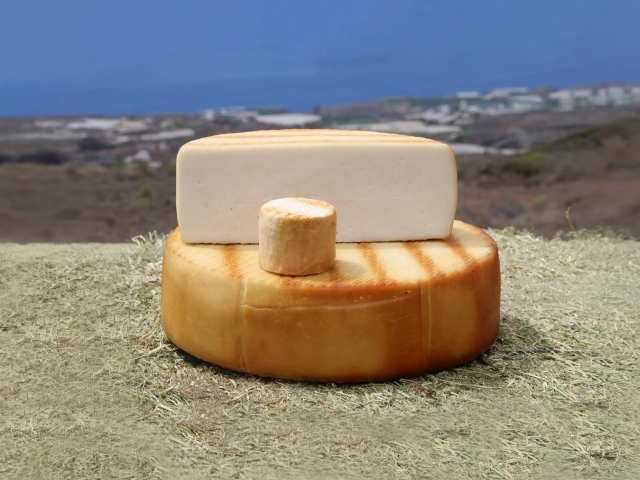
Farm visit with wine and cheese tasting at Tenerife's most awarded cheese dairy, whose products have twice received Super Gold at the World Cheese Awards.
Mango, avocado and papaya are typical here too, and they're all grown on the island. Make sure you try them fresh from a market.
What to watch out for: Canary Island spurge and prickly pear
One plant deserves a special warning: the Canary Island spurge (Euphorbia canariensis), which you'll find almost everywhere on the island. Its milky sap is poisonous to humans, so don't break it off and definitely don't taste it.
You'll also see prickly pear cactus almost everywhere. It spreads very fast, a bit like ivy back home: this is the species that was brought to the islands for the cochineal insects. By the end of your holiday you'll be tired of seeing it.
To sum up
Tenerife is safe when it comes to wildlife: there are no dangerous animals, and hardly any annoying insects.
In the water you can expect seagulls, ospreys, dolphins, turtles and flying fish, while dangerous sharks are extremely rare near the coast.
In Teide National Park, look out for the Canary pine, the red tajinaste, the blue chaffinch and the endemic lizards.
In the north, don't miss the laurel forests of Anaga, the Drago Milenario and the giant ficus of Puerto de la Cruz.
Make sure you try the plátano, the red banana, goat cheese with palm honey and the local wines.
Be careful with the sap of the Canary Island spurge, close your windows at night, and watch out for rabbits, dogs and cats when driving.
Of course, the island's flora and fauna are far more complex than this, and you'll discover plenty of wonders once you get out and about.
Plan ahead
Popular nature activities, boat trips and wildlife experiences are worth booking well in advance: the best dates and time slots can fill up long before you arrive. With FINESTPASS™, you can securely book tours and activities tried and tested by our local team from home. For more detail, download our free digital travel guides.
By cable car to the upper station (3,555 m / 11,663 ft), then onward with a local guide to the summit of Mount Teide (3,715 m / 12,188 ft) - the highest point in Spain. The most complete volcanic experience on Tenerife.
Guided, group tour with spectacular stops amid the volcanic landscapes of Teide National Park, including return transfer - without using the cable car.
One of the world's most important observatories - alongside Chile and Hawaii. Thanks to the exceptional observing conditions, international researchers study the Sun and phenomena of the universe.
 en

 Puerto de la Cruz