Getting Around Tenerife: Taxi, Bus, Transfer or Rental Car?
2026. November 7., Saturday, 08:00
How should you get around Tenerife? Taxi, Uber, bus, private transfer, motorbike, e-scooter or rental car: in this guide, based on our own local experience, we go through every way of getting around the island, explain which option suits whom, what to watch out for when renting a car, which car to choose, and how to get 5% off your rental car, with plenty of PRO tips.
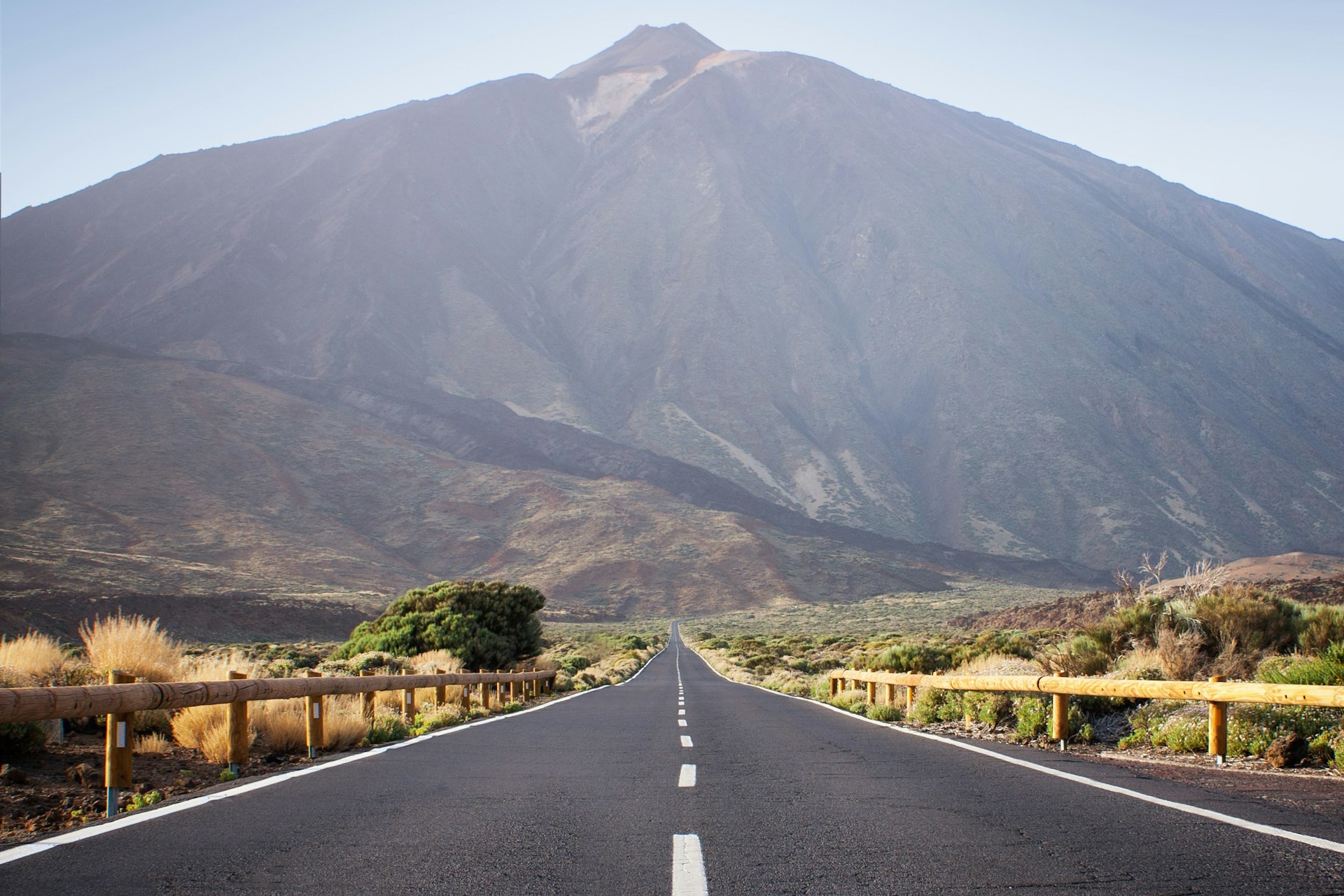
The road through Teide National Park, with the 3,715 m (12,188 ft) Mount Teide in the background. Tenerife's main roads are in excellent condition, and with a car even the island's most beautiful spots are easy to reach.⏐Fotó: Unsplash, Phil Mono
Public transport, taxis, private transfers or a rental car? In Tenerife, how you get around really matters: choose badly and a big chunk of your holiday budget simply goes on getting from A to B, which is a rather unfortunate achievement. In this guide, based on our own local experience, we go through all the island's transport options, explain which one we recommend for whom, and show you how to get a discount on your rental car. If you're just getting to know the island, start with Tenerife as a Destination: Everything You Need to Know.
In short: how should you get around Tenerife?
If you want to explore the island: rent a car. It's clearly the most practical and cost-effective option.
If you're mainly here to relax and only travel short distances: taxi or Uber.
If you can't or don't want to drive: the bus, combined with the occasional organized excursion.
If comfort matters more than anything and cost doesn't: a private transfer.
Taxis: the easiest option at the airport
If you arrive by plane, the simplest option is a taxi. At the airport this is almost suspiciously easy: walk out of the terminal, go about 50 m (165 ft), and there they are, ready to take you to your accommodation for a pretty reasonable fare. For what to expect at the airport and on board, see our guide Flying to Tenerife. But if you use taxis for every trip during your holiday, it quickly gets expensive.
Two important things about regular taxis:
Have one called for you: whenever possible, ask your hotel or a restaurant to call a taxi for you. Otherwise, there's a chance it simply won't show up.
You can't always flag one down: especially along the south coast, a taxi can only pick you up if it's licensed in the municipality you're currently in. Yes, even if it's completely empty.
Uber and Uber Black
Uber is simple: everything works through the app, where you can see exactly where your car is and roughly when it will arrive. If you fancy extra comfort, taxis have a more sophisticated relative: Uber Black. You book it in the same app, but this is not your everyday Uber. These are premium vehicles, usually large black saloon cars or vans. Expect to pay around 3 to 4 times the price of a normal taxi; in return, they tend to arrive right on time, the vehicles are spotless, and the ride is extremely comfortable.
We'd recommend taxis and Uber if you're only travelling short distances, don't plan to roam all over the island, and want to get around with as little effort as humanly possible. For a relaxed holiday, they're excellent backup options, especially if your main activity is doing absolutely nothing.
Buses and trams: cheaper, but limited
Public transport in Tenerife mainly means buses (locals call them guaguas). But remember: Tenerife is a volcanic island with two enormous molehills in the middle, so your options are somewhat limited. You can buy unlimited travel passes for 1 day, 1 week or other periods, even directly at the airport when you arrive. They give you unlimited bus travel, plus tram rides in the capital area.
Sounds wonderful, but for 2 people the cost can get surprisingly close to renting a small car for your entire holiday. In our experience, if you actually want to explore Tenerife, public transport is an excellent way to miss the best parts of the island. And there's another thing: if you rely on buses but also book an organized excursion or a transfer to an attraction, perhaps to the Teno Rural Park (Masca), Teide National Park, the capital or Loro Parque, the total cost for 2 people can easily exceed the price of renting a car.
So, purely in terms of cost and convenience, it isn't our first recommendation. But if renting a car isn't an option, public transport is still a perfectly good alternative, and generally much cheaper than relying on taxis or private transfers.
::TOUR_130,129_Teide without a car: transfer experiences::
Private transfers: the most comfortable and the most expensive
With a private transfer, you hire a company or an individual to drive you around the island. For many people it's the most comfortable choice, but also the most expensive: a single day of private transfers can cost 2 to 3 times as much as renting a small car for your entire holiday.
Scooters and motorcycles
You can also rent motorcycles in Tenerife, and we'd divide them into two categories: scooters and proper full-size motorcycles.
Scooters: personally, we wouldn't recommend them. Tenerife's road network isn't exactly scooter-friendly, and some roads can turn a peaceful ride into a rather ambitious survival exercise. If you're just cruising around Los Cristianos or Costa Adeje, that's perfectly reasonable, but exploring the entire island on a scooter is either practically impossible or extremely dangerous, because of the road network and the local driving culture.
Sports bikes: we wouldn't recommend these either. Tenerife has spectacular mountain roads, but they're winding, often narrow, and shared with professional cyclists, runners and tourists who occasionally cross the road as if they've just discovered immortality. And precisely where you'd be tempted to open up the throttle, you'll probably meet someone training for the Olympics on a bicycle. There's practically nowhere on the island where you can safely enjoy the full potential of a sports bike.
Touring motorcycles and choppers: a completely different story. They're a fantastic way to explore Tenerife, enjoy the scenery and experience those incredible mountain roads. But we'd still only recommend them to experienced riders: Tenerife isn't the ideal place to discover what all the buttons do.
PRO tip: we usually advise FINESTPASS™ guests to rent a car and, if they like, rent a motorcycle alongside it for just a day or two, for a dedicated riding day.
E-scooters: only with great care
Along the southern coast, in the tourist area stretching from Los Cristianos through Costa Adeje to La Caleta, you can also get around on electric scooters. There are two ways to rent them:
From a station, pay as you go: find a scooter station, unlock a scooter with your phone or card, ride around, and leave it at another station when you're done. The fare is deducted from your balance straight away. Simple enough, but usually on the expensive side.
For a whole week: in that case, charging it at your accommodation is your responsibility.
We don't usually recommend electric scooters to our customers. We consider them extremely dangerous, especially since so many people ride without proper helmets, and asphalt doesn't care that you're on holiday. With wheels that small, even a tiny crack in the pavement or an unexpected pothole can send you flying.
Mobility scooters for people with limited mobility
Another option worth mentioning is electric mobility scooters for people with limited mobility. They come in 1- or 2-person versions, you can rent them for a week or two, and they're a rather civilized way to get around along the oceanfront without turning every trip into an Olympic event.
Car rental: the best choice in Tenerife
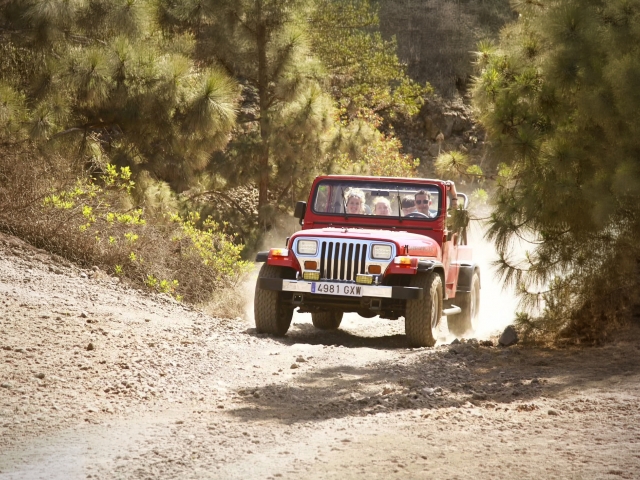
We've saved car rental for last, because it deserves a closer look. Here in Tenerife it's by far the option we recommend most, if it's available to you. You land at the airport, pick up your rental car, enjoy your holiday, and return it to the airport just before flying home. Beautifully simple, and simply brilliant. For Tenerife, we consider this the most practical and cost-effective way to get around. Let's go through the types of vehicles you can rent.
Motorhome
A motorhome combines your accommodation and transport in one rather large moving object. We cover them in detail in our guide Where to Stay in Tenerife. We're talking about modern, fully equipped motorhomes, not an old van with a mattress and unresolved mechanical problems. You'll usually pay a security deposit of a few hundred euros, which you get back as long as you return the vehicle undamaged and with everything intact.
And this lifestyle has one particularly wonderful advantage: you can spend nights and mornings right beside the Atlantic Ocean. Tenerife has some fantastic parking areas and wonderfully secluded spots where overnight parking may be permitted. Just make sure you always follow the local rules, because parking a motorhome and setting up a campsite are two very different things. Imagine waking up to the sound of the ocean, opening your door and finding the Atlantic right outside. Much better than opening your hotel curtains and discovering the air-conditioning unit of the neighboring building.
One important thing: we'd only recommend this if you already have experience driving a motorhome.
Luxury cars
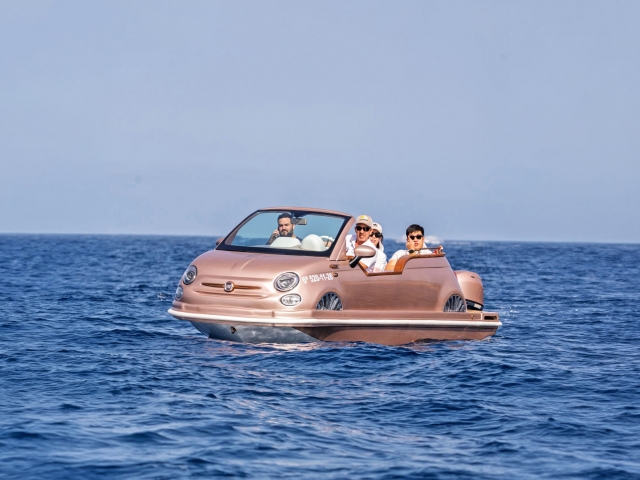
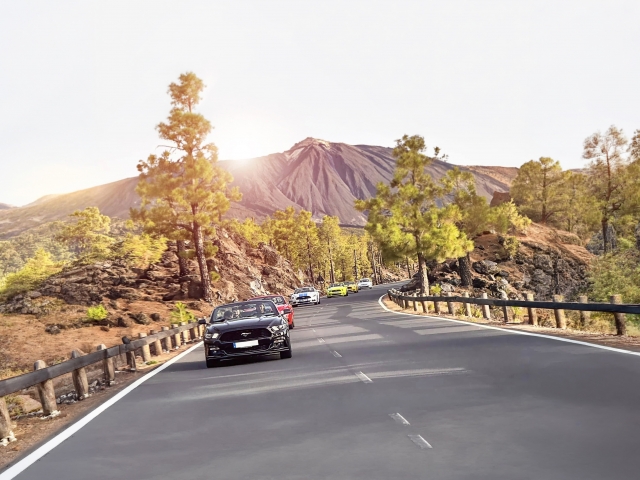
The second option is luxury car rental. We're mainly talking about high-performance sports cars such as Lamborghinis, Ferraris and similar machines designed to make your hair blow in the wind. Renting one involves a strict screening process: they'll want to know whether you've driven anything similar before, and you may need to pay a security deposit of several thousand euros. Still, it can be a fantastic experience, provided you stick to Tenerife's main roads and avoid venturing onto the smaller ones.
Regular car rental: private owner or rental company?
The third option is regular, everyday car rental. But even here there are 2 categories: renting from a private individual or from an officially licensed rental company. And believe us, you can find both excellent and absolutely terrible options in either category.
Renting from a private individual
A private rental means renting a car directly from someone who lives on the island rather than from a licensed rental company. It could be practically anyone: your mate, someone's uncle, or a man whose entire business apparently runs through Facebook Messenger.
The biggest advantage is flexibility: collection and return can be easier to arrange, locations more convenient, and the whole process more personal. But there are disadvantages too:
The condition of the car: in many cases these cars are older, have higher mileage and aren't in the same condition as vehicles from reputable rental companies. Something might rattle, the gearbox might have a life of its own, and several dashboard warning lights may be celebrating Christmas all year round.
Licence and insurance: this is the more serious issue. Unofficial private rentals may operate without the required rental licence or appropriate insurance. We've come across situations like this ourselves.
The price: these prehistoric cars can actually cost considerably more than renting from an official company, and private owners may also ask for a security deposit, not necessarily by credit card, but quite possibly in cash.
Sometimes the whole arrangement is presented as simply borrowing your best friend's car, which sounds perfectly innocent. Until someone asks why your best friend is charging you by the day. If the police stop you, always tell them the truth. But the real trouble starts if something goes wrong, especially in a traffic accident: suddenly, whether the car was legally rented and properly insured becomes extremely important. That's when you may find yourself negotiating the financial equivalent of a street fight with your best friend over who pays how much for the damage, because the insurance company might not be joining the conversation. Definitely something to think about beforehand.
Renting from an official rental company
The biggest advantages of official rental companies:
A newer car: you usually get a car less than 4 years old with low mileage, from a properly licensed company.
Insurance: with the right insurance, you normally won't have to pay for covered repairs yourself, provided you haven't deliberately caused the damage or violated the rental conditions.
Help when you need it: if the car breaks down, they can arrange roadside assistance, a tow truck and a replacement vehicle.
The price: because they operate much larger fleets, they can often offer significantly lower prices than private individuals. So you may actually pay less for a newer, better-maintained car with proper insurance and professional assistance.
Key drop box: if your flight leaves late at night, don't panic. Many airport rental offices have an after-hours key drop box, so you can return the car and simply drop off the keys. They'll inspect it later, check for damage and make sure you've returned it with the agreed fuel level. If everything's in order, any refundable deposit is released according to the rental terms.
Accessible vehicles: some companies also offer wheelchair-accessible vehicles, designed for easier access and for securing a wheelchair safely during the journey.
Which rental company do we recommend? CICAR
When it comes to rental conditions, there's a bit of everything: every company seems to have invented its own little universe of rules. So instead, let us tell you what we recommend, based on years of local experience and feedback from several thousand travelers we've helped.
In our experience, CICAR is one of the best choices, no question about it. Its parent company, Cabrera Medina, dates back to 1967 and has grown into one of Spain's major car rental groups, with the largest rental office network in the Canary Islands and a fleet of more than 17,000 modern vehicles. Their prices are often among the lowest, and their conditions are refreshingly straightforward:
comprehensive insurance with no excess, already included in the price, not hiding in the small print waiting to introduce itself at the counter;
unlimited mileage;
free child seats and booster seats;
an additional driver at no extra charge;
airport collection and roadside assistance.
Instead of demanding an enormous security deposit, they normally only ask for a fuel deposit, and the amount depends on how much fuel is in the car when you collect it. If the tank is empty, there's no fuel deposit; return the car with the same amount of fuel and you get your deposit back. You can reserve your car online in advance and pay when you collect it: cash in euros, debit cards and credit cards are accepted under the applicable payment conditions. The minimum driving age is 21, and you must have held your driving licence for at least 2 years.
A discount on your rental car: if you book your experiences through FINESTPASS™, you get 5% off your CICAR car rental, thanks to our exclusive partnership with CICAR. Once you've booked, send us your FINESTPASS™ and CICAR booking codes, and we'll have your discount approved.
Beware of suspiciously cheap rental cars
You've probably seen those unbelievably cheap rental cars advertised on accommodation booking platforms or airline websites, where the daily rate looks like a charitable donation. Then you arrive at the counter and discover they want €1,000 as a security deposit, and if you don't pay, you may lose the money you've already paid. Depending on the provider, additional insurance, card requirements and other conditions can turn that wonderful bargain into a rather expensive administrative hostage situation. That's another reason we prefer companies like CICAR: you secure your booking and price in advance, but only pay when you collect the car.
With international companies like Hertz, Sixt or Europcar, always check which payment cards they accept. Many bookings require a credit card rather than a regular debit card, and depending on the company and vehicle you could face a deposit of several hundred euros, temporarily vacuumed straight out of your available funds.
The most important rental rules
Only registered drivers may drive the car.
No racing, drifting, speeding or off-road adventures. Your Fiat Panda is not a rally car or a mountain goat.
Never drink and drive (more on alcohol limits below).
If your pet damages the car, you pay.
Commercial cargo transport may be forbidden, so forget your IKEA delivery business.
Put the wrong fuel in the tank, damage the tires or scrape the underside, and you may face repair costs. An ordinary puncture may be covered by roadside assistance, depending on your rental agreement.
What car should you rent? Small, automatic, SUV
From experience, we'd recommend a small automatic SUV, for three reasons:
Size: parking in Tenerife can be a nightmare, and narrow streets leave no room for optimism.
Automatic transmission: Tenerife is basically one enormous mountain, and on steep climbs the clutch of a manual car can overheat.
Ground clearance: those extra few centimeters (inches) help with high curbs, rocks and uneven roads. Your car's underside will appreciate it.
Traveling with 6 or 7 people: two SUVs instead of a minivan
Many groups rent a 7-seater. Sounds logical until the luggage arrives and mathematics stops working: 6 people, several checked suitcases, plus cabin bags and hand luggage. Unless you've brought some bungee cords, you're in trouble. Our recommendation: rent two SUVs instead. Plenty of luggage space, much more comfort, and the freedom to split up if you want different activities. Surprisingly, 2 SUVs often cost about the same as 1 minivan.
As a last resort, there's always an 8- or 9-seater minivan, where everything and everyone should fit. For older groups who prefer traveling together, a minivan can also work, but in Tenerife we'd really only recommend it as a last resort: narrow roads and limited parking seriously restrict your freedom, and you might spend half your holiday looking for somewhere to park that tank.
Driving rules and local curiosities
What you wear: driving in flip-flops or without a shirt is not allowed, so wear proper shoes and something on top. And please don't drive naked.
Phone: using a handheld phone while driving is forbidden.
Smoking: rental companies prohibit smoking in their cars.
Speed: on motorways the maximum speed is generally 120 km/h (75 mph), but always watch the signs, as speed limits can change. Even a small excess can result in a fine. There are fixed speed cameras across the island, including near the southern airport (TFS), along the southeastern coast, around Santa Cruz, La Laguna and Puerto de la Cruz, and on the northern coast.
Tolls: the good news is that there are no motorway tolls in Tenerife.
Parking: street parking is free, but there are also paid private car parks and underground garages. Car break-ins can happen, especially if you leave valuables in plain sight.
Tunnels: the island has some fascinating tunnels carved through volcanic rock. Some are impressive engineering achievements, while others feel like someone simply convinced a mountain to let traffic through.
Police checks: they're fairly rare, but they do happen. If you're stopped, you'll need your rental agreement, identification (a passport or an ID card) and your driving licence. Enough paperwork to prove you haven't stolen the car.
Alcohol: if you drive, don't drink
The general limit is 0.25 mg/L (25 µg/100 mL) of alcohol in exhaled breath; above that, it's an offence. Above 0.50 mg/L (50 µg/100 mL) it's a serious traffic offence, and above 0.60 mg/L (60 µg/100 mL) it's a criminal offence. Driving under the influence can also lead to criminal prosecution at lower levels. Our advice is simple: if you drive, don't drink. Period.
Road closures: check every morning
Road closures sometimes happen, particularly in the mountains. If you're heading to Masca, Anaga or Teide, check the official road conditions every morning before setting off. Better to discover a closure over breakfast than after wasting an entire day. For what to expect in the mountains in each season, read our article on Tenerife's weather.
Navigation: Google Maps, offline
For navigation we recommend Google Maps, not Apple Maps and not Waze: from years of experience, Google Maps works best on the island.
PRO tip: before you arrive, download the entire island for offline use in Google Maps. It only takes a few clicks and can save you a considerable amount of mobile data, especially when roaming.
Most modern rental cars also come with Apple CarPlay or Android Auto, so you can display your phone's navigation directly on the car's screen. Very convenient, especially if you'd rather watch the road than hold your phone like a confused treasure hunter.
Always choose the main roads
Tenerife's roads are generally in excellent condition, particularly the main routes. But don't let that fool you: some remote areas have narrow, complicated, rocky roads where it's surprisingly easy to get lost, and occasionally scared to death. As local travel experts, we've seen enough of these roads to know that the shortest route on your navigation app is sometimes also the quickest way to question your life choices. Always choose the main roads. Always.
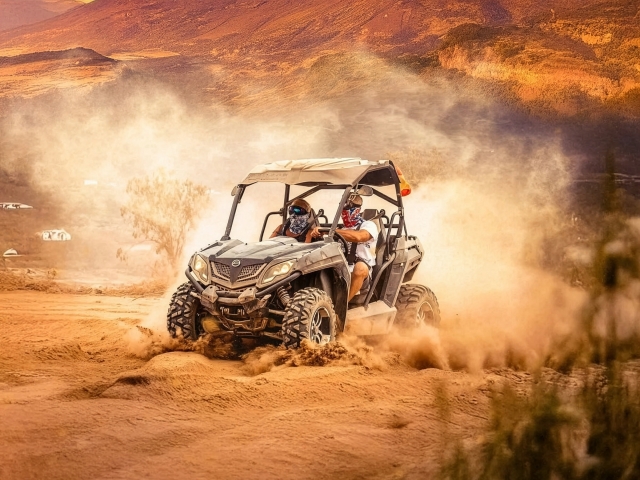
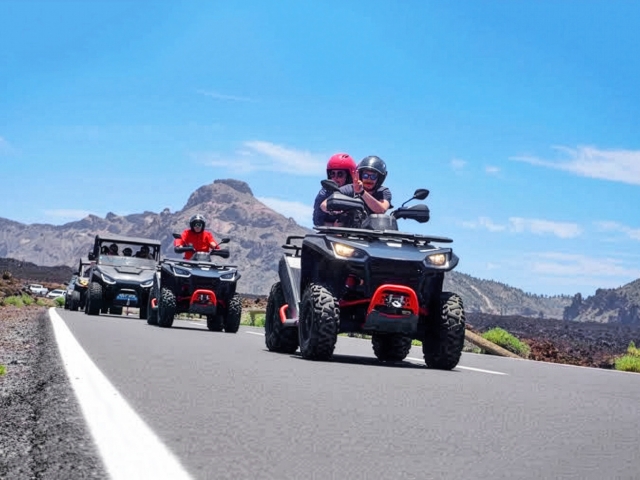
If you'd rather explore the mountain roads and the terrain with a local guide, these experiences are a good choice:
A guided buggy tour along Tenerife’s volcanic mountain roads, combining panoramic views of Teide from an open vehicle with your choice of an off-road section or a sunset experience.
A guided quad tour along the scenic mountain roads of Teide National Park, with automatic vehicles, volcanic landscapes, carefully selected photo stops and a small-group setting.
Here's another PRO tip: we work closely with travelers and local providers, so we have a good understanding of how things work on the island. If you're renting a car, make sure your accommodation has parking nearby, ideally its own private parking space.
We've heard countless horror stories from travelers, including friends who spent 45 minutes driving around looking for somewhere to park. Not 10 minutes, not 15. Forty-five. At that point you're no longer looking for parking; you're conducting a detailed investigation into the local road network. And when they finally found a parking garage, they still had to walk another 10 minutes to their accommodation after an exhausting day. Goodbye, dinner reservation.
There's a reason for this: Tenerife has an enormous number of cars relative to its population. In many areas the steep roads and distances make walking impractical, so almost everyone relies on a car. Add thousands of rental vehicles to the equation, including the huge fleets of companies like CICAR, and suddenly the parking situation makes perfect sense.
So our advice is simple: if you're renting a car, book accommodation with convenient parking, preferably a private space. A beautiful apartment is considerably less beautiful when your car is parked in another postcode. Your future self, your limbs and possibly your relationship will thank you. For more on choosing your accommodation, read Where to Stay in Tenerife.
Plan ahead
If you're planning to join some activities, book them well before your trip: the best dates and time slots for popular experiences often fill up long before you arrive, so don't let other travelers beat you to it. With FINESTPASS™, you can securely book tours and activities tried and tested by our local team from home, and get 5% off your CICAR car rental as well. For more detail, download our free digital travel guides.
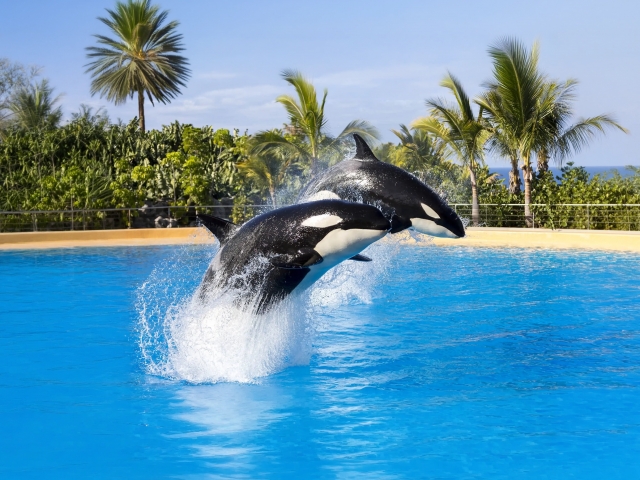
Loro Parque, regarded as the best zoo in the world, is no ordinary zoo: it brings together more than 400 animal species, an Antarctic habitat with real snow, the world's largest coral reef outside the ocean and world-famous animal presentations in an unrivalled full-day experience.
By cable car to the upper station (3,555 m / 11,663 ft), then onward with a local guide to the summit of Mount Teide (3,715 m / 12,188 ft) - the highest point in Spain. The most complete volcanic experience on Tenerife.
 en

 Costa Adeje