The History of Tenerife: From the Guanches to the Present Day
2026. október 31., szombat, 04:46
On a geological timescale, Tenerife is a newcomer: its oldest mountains rose from the ocean only 12 million years ago. In this overview we follow the story of the "Duck" from volcanic eruptions and giant lizards, through the Guanche kings and the Spanish conquest, to Malvasia wine, Admiral Nelson and modern tourism. Expect both the nice chapters and the not-so-nice ones.
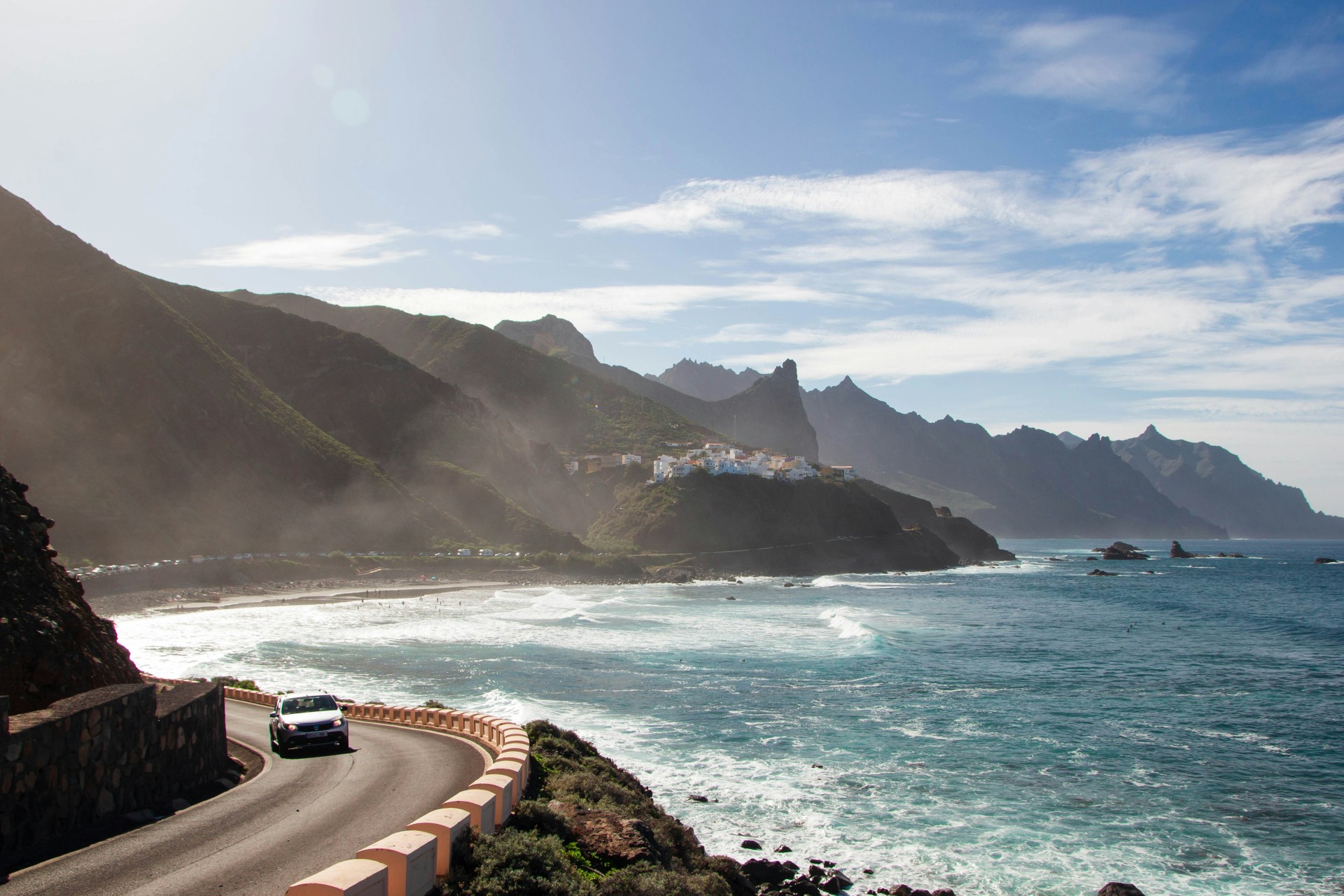
The Anaga coast in Tenerife's north-east corner, around Almáciga and Benijo. Anaga is one of the oldest parts of the island: it was once a separate island, until volcanic activity joined it to Teno and the Valle de San Lorenzo mountains. Its jagged ridges and deep valleys tell the story of millions of years of erosion.⏐Fotó: Unsplash, Maria Lupan
Why the "Duck"?
Look at a map and Tenerife looks like a duck, with a head, a body and a tail. That's why we simply call it the "Duck". If you'd like to know what the island is like today, read our overview Tenerife as a Destination: Everything You Need to Know.
The birth of a young island
The Earth is around 4.5 billion years old. By comparison, Tenerife is a newcomer: its oldest mountain ranges rose from the Atlantic Ocean through volcanic eruptions only 12 million years ago.
The island took its present shape about 3 million years ago, when three separate islands, formed by the Anaga, Teno and Valle de San Lorenzo mountain ranges, fused together. This was the work of Las Cañadas, a giant volcano. Estimates suggest that Las Cañadas may have stood up to 7,000 m (23,000 ft) above sea level, and around 11,000 m (36,000 ft) high including its underwater part.
Around 800,000 years ago, huge landslides swept down the slopes of Las Cañadas, and after a major eruption its summit collapsed. Some 200,000 years ago, Teide, today Spain's highest mountain, began to grow inside that crater.
At the time, giant rats, giant lizards and giant tortoises lived here in peace. Volcanic activity, and later the arrival of humans, wiped them all out.
The native Guanches
The earliest known human settlement on the island dates from around 200 BCE and was founded by Berbers, a North African people. The island's native people are known as the Guanches, and no one knows for sure how they got here from Africa. Around this time the ancient Romans called the island Nivaria, a clear reference to the snow on the peak of Teide (nix means snow in Latin).
The Guanches were culturally advanced but technologically limited, because the island had few raw materials and no metals. They worshipped several gods and mummified their dead. You can see these mummies today in Santa Cruz de Tenerife, at the Museum of Nature and Archaeology (MUNA).
To get around the steep, rocky terrain, they used the "shepherd's leap" (salto del pastor), vaulting down the rocks with a long wooden pole. The tradition is still kept alive on the island today.
Their king held the title of mencey. Tinerfe the Great ruled the whole island from Adeje in the south, but after his death his nine children rebelled and split Tenerife into nine kingdoms (menceyatos).
In the late 14th century, on the coast of Güímar, the Guanches found a statue of a Black Madonna. Our Lady of Candelaria has been the patron saint of the island, and of the whole Canary Islands, ever since.
Hell Island and the Spanish conquest
Maps from the 13th to the 15th centuries marked Tenerife as Isla del Infierno, or Hell Island, because of the violent volcanic eruptions of the time.
Then the Spanish set their sights on the island. In 1464, Diego García de Herrera took symbolic possession of it and signed a peace treaty with the menceyes, which allowed him to build a fortified tower on the north-east coast, where both sides could discuss the conquest in comfort. The talks didn't go well: eight years later the Guanches pulled the tower down.
In 1492, Francisco Maldonado led a raid in the north that ended in disaster: the Guanches gave the Spanish a thorough beating. That same year, Christopher Columbus saw a volcano erupting on Tenerife on his way to America.
In 1493, Queen Isabella I and King Ferdinand II lost their patience and ordered the conquest of the island under Alonso Fernández de Lugo. In 1494, Lugo landed on the coast of today's Santa Cruz de Tenerife with about 2,000 foot soldiers and 200 horsemen, took the fort and pushed inland.
The menceyes were divided: some chose peace, the others fought. The resistance was led by Bencomo, mencey of Taoro. At the first Battle of Acentejo (1494), the Guanches dealt the Spanish a heavy defeat, still remembered in the name of the town La Matanza de Acentejo ("the slaughter of Acentejo"). In the battles that followed, at La Laguna and at the second Battle of Acentejo, the Spanish won, remembered in the name of La Victoria de Acentejo. The Guanches held out for two years, but superior technology and weapons finally prevailed, and in 1496 they surrendered to the Crown of Castile. Several menceyes were taken to Spain and presented to Isabella and Ferdinand.
Tenerife was the last of the Canary Islands to be conquered, and the one that resisted the Castilian army the longest. After the conquest, many natives died of influenza and probably smallpox, to which they had no immunity. Many new settlers arrived, married into the local population and started businesses.
Sugar, wine and emigration
The island exported huge quantities of sugar cane, wine, rum and later cochineal (the insect used for red dye) to Europe and the Americas. Tenerife's Malvasia wine became famous far and wide: "canary", the wine of the Canary Islands, appears in several of Shakespeare's plays, and tradition has it that he loved it himself.
Not everyone found a business opportunity, though, and emigration to the Americas began, especially to Cuba and Venezuela. It continued for centuries, until tourism took off on the island.
Uno de los centros vitivinícolas más reconocidos de Tenerife, que muestra la cultura del vino de la isla en una encantadora hacienda canaria del siglo XVII, con la mayor selección de vinos locales de Tenerife.
The 18th century: eruptions, independence and Nelson's arm
In 1704 and 1705, three volcanoes erupted: Siete Fuentes, Fasnia and Las Arenas. In 1706, the eruption of Trevejo destroyed Garachico, the island's main trading port and wealthiest town. The lava filled in the harbour, and Garachico never regained its former role.
Legend has it that in 1776 the signing of the United States Declaration of Independence was celebrated with a fine glass of Malvasia wine from Tenerife.
In 1797, the British also thought it would be a good idea to invade the "Duck". The attack on Santa Cruz de Tenerife was led by Admiral Horatio Nelson, one of the greatest commanders in British history, but General Antonio Gutiérrez's defenders drove it back. The most Nelson achieved was losing his right arm.
In 1798, Pico Viejo erupted. No one died.
The 19th century: phylloxera and the first tourists
In the 1870s, the phylloxera epidemic destroyed most of Europe's vineyards. The Canary Islands were spared: according to locals, the pest could not take hold in vineyards at around 1,000 m (3,300 ft) above sea level. Tradition says that vines from Tenerife and the other Canary Islands helped replant Europe's vineyards, so the "Duck" saved the world a little.
From 1890, tourists began arriving by ship in large numbers, at first mainly for health cures and spas. The same year, Hotel Taoro opened in Puerto de la Cruz, one of the largest and most elegant hotels in Spain at the time, welcoming the world's richest and most famous guests. Tradition has it that Agatha Christie wrote two of her books here. Alexander von Humboldt, the founder of biogeography whose work inspired Charles Darwin, had already written about the island with fascination back in 1799.
In 1893, the Plaza de Toros bullring opened in Santa Cruz.
The 20th century: the birth of modern Tenerife
1909: Chinyero erupted, and once again no one died or was injured.
1936: Francisco Franco, posted to Tenerife as military commander of the Canary Islands, organised from here the military uprising that sparked the Spanish Civil War.
1959: the Basilica of Candelaria was completed, now home to the Black Madonna.
1964: the Teide Observatory was built, one of the first major international observatories. Thanks to the excellent astronomical seeing conditions, countries from around the world installed telescopes here.
1965: construction began in Los Cristianos and Las Américas, today's southern resort area.
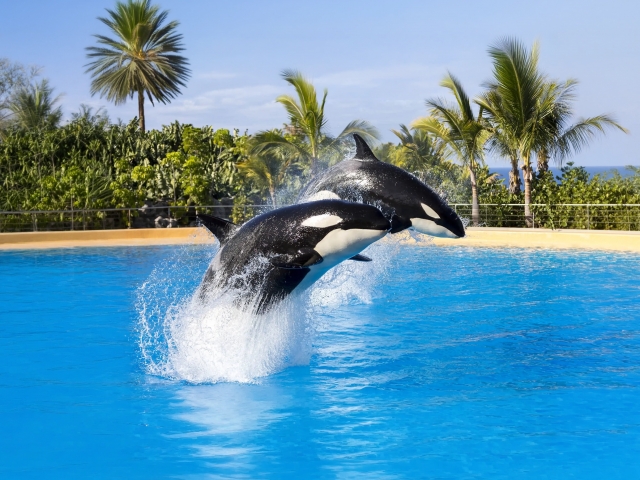
1972: Loro Parque opened.
1977: two Boeing 747s collided at Los Rodeos Airport in the north, still the deadliest accident in civil aviation history.
1978: Tenerife South Airport (TFS) opened.
1984: the bullring closed for good; in 1991 the Canary Islands became the first region in Spain to ban bullfighting.
The 21st century
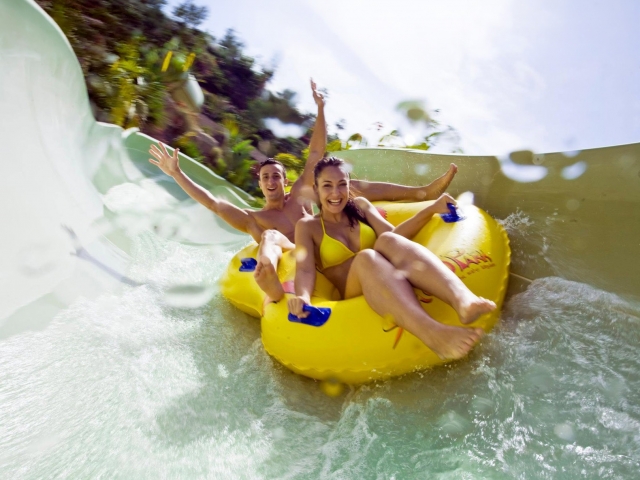
In 2002, extreme rainfall hit the north-east of the island and flooded the streets of Santa Cruz. In 2005, Tropical Storm Delta reached the island: winds of 140 km/h (87 mph) were recorded on the coast, and almost 250 km/h (155 mph) further inland. In 2008, Siam Park opened.
Today the island lives mainly on banana cultivation and tourism, and around 8 million visitors arrive on the "Duck" every year.
Uno de los observatorios más importantes del mundo - junto con Chile y Hawái. Gracias a las condiciones excepcionales de observación, investigadores internacionales estudian el Sol y los fenómenos del universo.
Loro Parque, considerado el mejor zoológico del mundo, no es un zoológico convencional: reúne más de 400 especies animales, un hábitat antártico creado con nieve real, el arrecife de coral más grande fuera del océano y presentaciones de animales mundialmente famosas en una experiencia incomparable de día completo.
Un parque acuático de inspiración tailandesa elegido el mejor del mundo con olas artificiales de 3 metros, espectaculares zonas infantiles y familiares, y atracciones que van desde el tranquilo río lento hasta una caída libre de 28 metros.
When you're here, these are the biggest history museums:
Museo de la Naturaleza y Arqueología (MUNA), Santa Cruz de Tenerife: the Museum of Nature and Archaeology, home to the Guanche mummies.
Museo Histórico Militar de Canarias, Santa Cruz de Tenerife: the Historical Military Museum, with memories of Nelson's 1797 attack.
Museo de Historia y Antropología de Tenerife, San Cristóbal de La Laguna: the Museum of History and Anthropology, in the UNESCO World Heritage old town.
On top of these, there are 25 to 30 smaller museums and exhibition spaces to discover.
Films and famous visitors
Tenerife attracts filmmakers too. Scenes from The Hitchhiker's Guide to the Galaxy, Clash of the Titans, Wrath of the Titans, Furious 6, Jason Bourne, Rambo: Last Blood, Wonder Woman 1984 and Den of Thieves 2 were shot here, and Dua Lipa filmed her Yves Saint Laurent videos on the island.
Many celebrities have visited the island, including Michael Jackson, Elizabeth Taylor, Richard Burton, Matt Damon, George Clooney, Liam Neeson, Bill Clinton, Brian May, the Beatles, Agatha Christie, Paz Vega and Sting.
Plan ahead
This was just a nutshell overview; the island's history is far richer and more diverse. If you'd like to see these places for yourself, with FINESTPASS™ our local team recommends tried-and-tested tours and activities that you can book securely from home. For more detail, download our free digital travel guides.
Watch the full video too, and subscribe: in the upcoming episodes we go deeper and deeper.
 es


 El Sauzal