Where to Stay in Tenerife: The Best Areas and Accommodation Types
2026. november 6., péntek, 08:23
Where should you stay in Tenerife? On this island the atmosphere, and even the weather, can change from one town to the next and sometimes from one street to another, so where you book really matters. In this guide we walk through the main areas and towns of the island, show you some unusual places to stay, from motorhomes and bubble houses to the parador at the foot of Teide, and finish with the traditional options from hostels to villas, with plenty of local PRO tips.
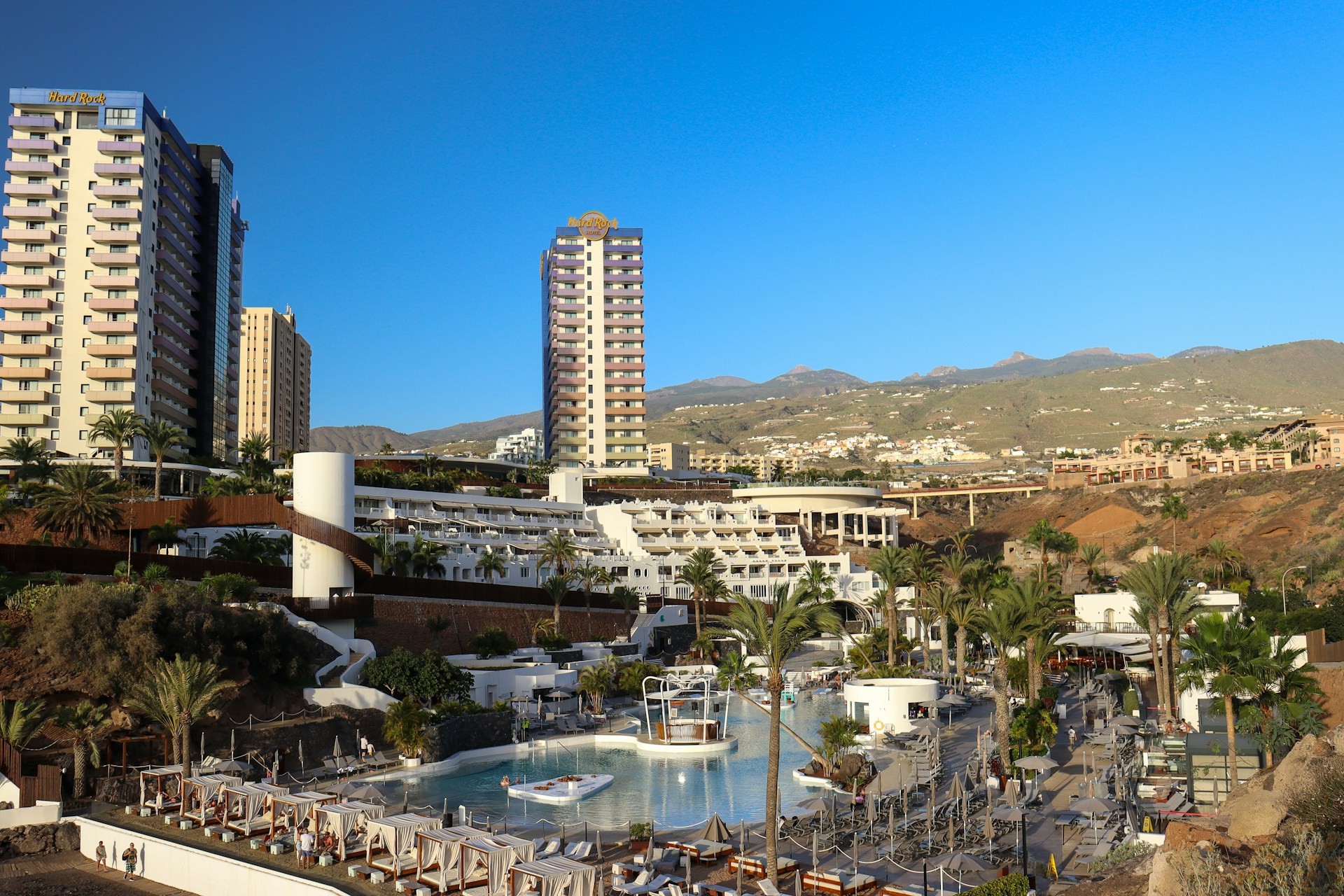
The towers and pool terrace of the Hard Rock Hotel Tenerife in Playa Paraíso, in the municipality of Adeje. Most of the island's best-known hotels line the sheltered south coast, but it isn't the best choice for everyone.⏐Fotó: Unsplash, Nicole Arango Lang
Tenerife is surprisingly complicated when it comes to accommodation. The atmosphere, and above all the weather, can change from one town to another, from one neighborhood to the next, and sometimes from one side of the street to the other. In this guide we'll help you understand the island a little better, so you can find the area and the type of accommodation that suits you best. For the basics (where the island is, how to get there and how to get around), read Tenerife as a Destination: Everything You Need to Know.
In short: where to book
First time in Tenerife: in our view, Costa Adeje is definitely the best area to look for accommodation.
Coming back for a second time: anywhere between Los Cristianos and Callao Salvaje can be a very good option.
By your third visit, you'll probably already know which area suits you best.
The south coast: from Los Cristianos to Los Gigantes
The sheltered southern coast stretches from Los Cristianos to Los Gigantes. It's one of the most valuable and developed parts of Tenerife: very international, foreigner-friendly, and the weather is good all year round. Let's start with the first town and work our way along the coast.
Los Cristianos: a British feel
Los Cristianos has real character: generations of British visitors have been coming back here for decades. If you're British, or you simply like British culture, this could be the right place for you. It has two sandy beaches and an old-town-style area with plenty of restaurants. We'd consider it more adult-friendly.
One thing worth mentioning: over the past decade, petty crime such as theft, car break-ins and stealing from the beach has become a little more common here. It's still relatively rare and the situation isn't dramatic, but keep an eye on your valuables.
Playa de las Américas: lively, with nightlife
Playa de las Américas is a good choice if you like a lively atmosphere, nightlife, shops and plenty going on around you. It has two good sandy beaches, and this is also where you'll find one of the main tourist streets, the Golden Mile, with the Hard Rock Cafe.
The upper part of Las Américas is the main nightlife and party area. It can be quite noisy, so if you're coming to Tenerife mainly to rest and relax, this is probably not your place. But if you like to go full speed, it may be exactly what you're looking for. Mostly adult-friendly, but it can also work for families who enjoy a lively atmosphere.
Costa Adeje: the best all-round choice
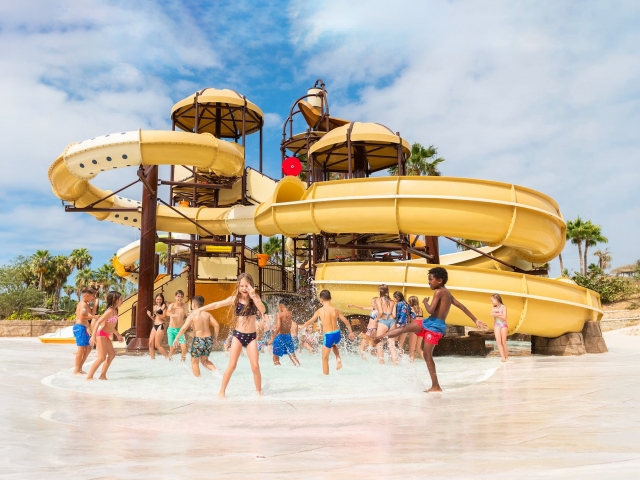
Moving further along the coast, next to Las Américas is Costa Adeje. This is a calmer, more family-friendly and more romantic area, with beautiful promenades and better public safety, and it mainly attracts higher-quality tourism. Around 90% of Tenerife's five-star hotels are located here. There are excellent restaurants too, including fine-dining and Michelin-level options, and the beaches are sandy and family-friendly. Siam Park and Aqualand are also here. Costa Adeje also has a quieter hillside area with excellent views.
If you're traveling with your family, or simply looking for one of the best all-round areas on the island, you've found it.
Un parque acuático de inspiración tailandesa elegido el mejor del mundo con olas artificiales de 3 metros, espectaculares zonas infantiles y familiares, y atracciones que van desde el tranquilo río lento hasta una caída libre de 28 metros.
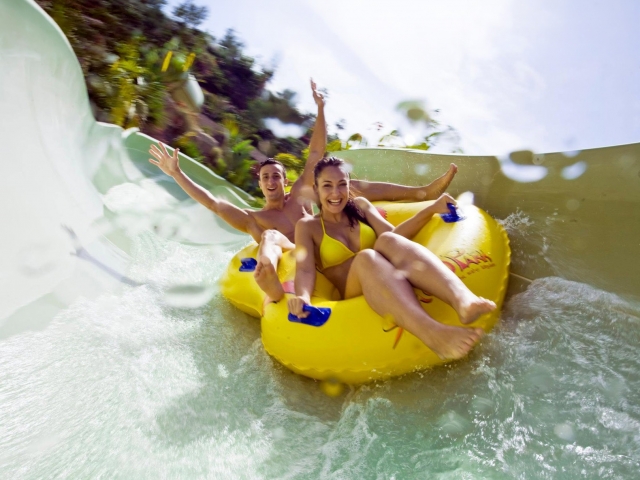
Una experiencia acuática de día completo con emocionantes toboganes, un relajante recorrido en flotador, zonas especiales para niños pequeños y una divertida exhibición de delfines.
Next to Costa Adeje is La Caleta, which appeals to a very specific type of visitor: whenever we think of this place, we think of a discreet, affluent crowd. It's definitely an adult-friendly choice.
Adeje: local life above the resorts
Above the coast is the town of Adeje, once the seat of one of the Guanche kingdoms and one of the oldest settlements in Tenerife (read more about the island's past in The History of Tenerife). This is more of an advanced-level choice: it's much less touristy, and a good option if you want a glimpse into the everyday life of locals who work in tourism. It has an adult-friendly atmosphere and gives you the feeling of actually living here. Everything is only a few minutes away by car, yet you're completely removed from the tourist areas.
Playa Paraíso and Callao Salvaje: sun and relaxation
Further along, these two towns feel more suburban. They're a good choice if you're mainly coming for the weather and want to relax at your accommodation, but still plan to join the occasional bus excursion or have an active day. They also work well if gastronomy and nightlife aren't major priorities for you. Both are a good fit for families as well as adults traveling without children.
Between Callao Salvaje and Los Gigantes
On this stretch of coast, the upper, hillside areas are generally the most attractive. If you find a small rural property here, you can really enjoy the warm, sheltered weather, with beautiful views across to the neighboring island of La Gomera and some spectacular sunsets. This part of the coast is best for getting away from everything. We'd generally call it adult-friendly, just like most of the island: in our opinion, only Costa Adeje and Playa de las Américas are truly family-friendly.
This area is also home to Abama, with The Ritz-Carlton and its beautiful resort.
Los Gigantes: a retirement paradise
Los Gigantes is what we locals sometimes call a retirement paradise. It has a similar feel to Paphos in Cyprus: very peaceful, far away from everything, and perfect if you're looking for a quiet small-town lifestyle with an incredible amount of sunshine. We'd definitely consider it an adult-friendly destination. It's a great choice for a relaxing holiday, but if you want an active one, you can spend a lot of time traveling: it takes at least 20 minutes just to get out of the area in either direction.
Masca: for one or two nights
You can also stay in the mountain village of Masca, although we'd only recommend it for one or two nights. It can be a once-in-a-lifetime experience, especially in the evening, when the day visitors leave, the village empties out and the whole place takes on a very special atmosphere.
The north and northeast: nature, cities and local life
From Buenavista del Norte all the way to Chamorga, this part of the island is a great choice if you're looking for an adult-friendly holiday closer to nature. In our experience, most of the north coast isn't really suitable for swimming, apart from a few small spots: it's much more about walking, exploring nature, enjoying the landscape and getting a better feel for how locals actually live. This side of the island is generally cooler and windier, as we explain in our article on Tenerife's weather.
Garachico: has a very special atmosphere that's hard to put into words, a little like Český Krumlov.
Icod de los Vinos: you can find accommodation here with excellent views of Mount Teide.
Puerto de la Cruz: known for its evening walks, very good restaurants and a genuine urban atmosphere. There are also some more budget-friendly hotels here, although most of them are a little further from the town center.
San Cristóbal de La Laguna: much rainier and windier. It feels like a European university town, with lots of students, excellent restaurants, tapas bars and cafés. It's absolutely worth visiting because it's beautiful, but we wouldn't choose to stay there.
Anaga: really only for you if you're looking for the end of the world and don't need much in terms of comfort. It's perfect for a quiet, adult-friendly escape, for hiking, and for spending a week surrounded by peace and silence.
Santa Cruz de Tenerife: if what you want is a proper city environment, the capital is the obvious choice. It has a real capital-city atmosphere, a little like La Laguna, but in a warmer version.
The east coast: warm, at a better price
The east coast has two very different parts. In our opinion, the upper, northern section doesn't make much sense from a tourism point of view: it's very barren, windy and less developed. From El Médano southwards, though, things start to get livelier. Here you should expect stronger winds, some aircraft noise and a generally dustier environment, and getting to the main southern resorts takes more time. On the other hand, temperatures are warm, quite similar to the south, and accommodation is much more budget-friendly. It's a perfect choice if you want a warm holiday in Tenerife at a good price, in exchange for a few small compromises.
To sum up: which area suits whom?
For most people, three areas work perfectly:
Los Cristianos: if you're British or you simply love British culture. More adult-friendly.
Playa de las Américas: if you're a party ninja, or you just like streets that actually feel alive. Mostly adult-friendly, but it can also work for families who enjoy a lively atmosphere.
Costa Adeje: for a romantic holiday, a proper family holiday, or simply the best all-round choice.
And for everything else:
A proper holiday feel, with costs under control (as a family or as adults): Puerto de la Cruz or the lower part of the east coast, depending on your taste.
An elegant, adult-friendly escape, where you can disappear quietly like a vampire: La Caleta.
A retirement vibe: Los Gigantes.
Close to nature: the entire north coast.
The full hermit experience, because you're currently writing your future bestseller: the last villages of Anaga.
Gastronomy and great restaurants: Costa Adeje, La Laguna or Puerto de la Cruz.
Warm weather and swimmable beaches: Las Américas and Costa Adeje.
Beautiful hotels: Costa Adeje.
We've deliberately left out mountain accommodation above 400 m (1,300 ft): it can often feel quite cold up there.
Unusual places to stay
Now let's move on to the different types of accommodation, starting with the unusual ones.
Motorhome
A motorhome can be an excellent option. You usually have to leave a deposit of a few hundred euros, which is refunded as long as you return the vehicle undamaged and with everything intact. Rental motorhomes are generally new, modern models and very well equipped. You'll normally find two-berth and four-berth versions; in the four-berth ones, the sleeping area can often be divided into separate sections, so if parents are traveling with two children, or two couples or a group of friends are traveling together, everyone still gets some privacy.
Motorhomes can be parked in many places around the island, and there are quite a few safe and suitable parking options. Use the Tenerife ON app to check motorhome parking areas and any temporary closures, and park4night, an app designed specifically for motorhome travel, to find water refill points, waste disposal facilities, laundries, parking areas and other useful services.
One important warning: we'd only recommend this if you already have some experience with motorhomes. With its narrow, winding roads and mountain routes, Tenerife isn't the best place to learn from scratch. Motorhome travel is a lifestyle: if you already know what you're doing, you'll probably love it; if you don't, it can quickly become stressful and turn the whole holiday into hard work.
Bubble house
You may already know the bubble hotel concept, as it has become popular around the world. You'll find bubble hotels in several locations across Tenerife, and the number of bubbles varies from place to place. They usually offer panoramic views, and you can see the stars clearly from inside. Tenerife is especially well known for its excellent stargazing conditions, so this type of accommodation works particularly well here.
We recommend choosing a bubble hotel as an addition to a more traditional stay: spending 2 or 3 nights in a bubble alongside your normal accommodation can become a truly memorable experience. Keep in mind that these places usually have a minimum stay of 2 or 3 nights, or you'll have to pay the equivalent price.
Yurt
There are also some great places in Tenerife where you can stay in a yurt, and they're appearing in more and more parts of the island. As far as we know, Germans were among the first to introduce the concept here, as part of a retreat center in the north (we actually visited them years ago). These places focus mainly on meditation, relaxation and recharging, so they tend to have a more spiritual atmosphere, but they're happy to welcome anyone who simply wants to try the yurt experience.
This is a more nomadic style of accommodation, so don't expect a golden toilet or other luxury nonsense: be prepared for more basic conditions. We'd usually recommend it for 2 or 3 nights, unless your real goal is to switch off in nature and live more simply for a while. In that case, it could easily work for several weeks.
Capsule hotel
There's also a capsule hotel in the north, in Puerto de la Cruz, which is a very interesting experience. We've stayed there ourselves, and we'll be uploading the video we made about it to the channel, so it's worth subscribing. We definitely wouldn't recommend it with children, but for adults it can be a fun one-night adventure: you sleep inside a very small private capsule. If you've never tried this Japanese-style concept before, it's definitely worth doing once.
Finca
A "finca" is roughly a farm or rural estate. These are usually charming detached properties on the hillside, surrounded by a huge amount of peace and quiet. They often come with private parking, a Jacuzzi, a swimming pool and a covered terrace, and a completely different atmosphere from the main tourist areas.
If you want something genuinely special, we'd look at a finca rather than one of the typical tourist villas: they usually feel much more exclusive and authentic, and they're not necessarily any more expensive. Sometimes you'll find one right in the middle of a banana plantation, or tucked away on a hillside. They can be absolutely beautiful.
Camping
In Tenerife, there are basically two ways to go camping:
Oceanfront campsites: you can book a proper pitch, and in some places even get a tent, if you somehow manage to arrive for a camping holiday without one. These campsites aren't necessarily cheap, especially in high season.
Your own gear, around the island: you can set up in the authorized recreational areas. Here too, the Tenerife ON app is extremely useful, as it shows the official areas, availability and any temporary closures. This version can be much more budget-friendly, and combined with a rental car it's a really good way to experience the island.
Up in the mountains it can obviously get cold, so expect a fairly cozy experience there, while down by the coast the temperatures are much more comfortable.
Parador de Las Cañadas del Teide
Finally, one very special place to stay: the Parador de Las Cañadas del Teide stands right in the middle of Teide National Park, inside the ancient Las Cañadas caldera, where Teide and the enormous Pico Viejo later formed. Both rise to more than 3,000 m (9,840 ft), and you can stay right at the foot of these two giant volcanoes in a beautiful 3-star hotel.
It's a truly unique experience, especially if you're planning to hike to the summit of Mount Teide. The hotel itself is already at more than 2,000 m (6,560 ft) above sea level, so a night here can also help you acclimatize to the altitude before going higher. There's a swimming pool, spa, sauna, restaurant and fireplace, and the atmosphere is absolutely incredible. We've filmed a video here too, and soon you'll see what it's like to enjoy a bit of wellness right at the foot of a volcano.
Uno de los observatorios más importantes del mundo - junto con Chile y Hawái. Gracias a las condiciones excepcionales de observación, investigadores internacionales estudian el Sol y los fenómenos del universo.
En teleférico hasta la estación superior (3.555 m / 11.663 ft), después con un guía local hasta la cima del Teide (3.715 m / 12.188 ft) - el punto más alto de España. La experiencia volcánica más completa de Tenerife.
Alongside these alternative options, there are five more conventional types of accommodation for a holiday in Tenerife: hostel, aparthotel, hotel, apartment and villa.
Hostel
A hostel is the budget-friendly option, with shared bathrooms and dorm rooms, where you can meet travelers from different countries and sleep in the same shared space. It can be a very good choice for hikers, younger travelers, or anyone who wants to keep the cost of the trip as low as possible.
Aparthotel
Think of an aparthotel as a mix between a hotel and an apartment. You usually get more space, a small kitchen or kitchenette, and the freedom to prepare your own food, while still having hotel-style services such as reception, cleaning and often a swimming pool. They're especially practical for families, longer stays, or anyone who wants more independence without giving up the convenience of a hotel.
Hotel
One thing to know in this category: you won't really find roadside motels in Tenerife. The island is simply too small for that concept to make much sense.
There's also something worth knowing about beachfront hotels: in Tenerife and across the Canary Islands, beaches are public. Even if a hotel is located directly by the beach, including places such as The Ritz-Carlton or the Hard Rock Hotel, the beach itself isn't private: no matter how large, famous or expensive a hotel is, it can't claim the beach as its own. We think that's a very good thing. So if you book a beachfront hotel, keep in mind that you're paying for direct access to the beach, not for a private beach.
Before booking any hotel, always check its Google reviews. Personally, we'd be cautious with anything rated below 4.3.
Meal plans: breakfast yes, dinner in town
If you're not coming to Tenerife for a completely passive holiday but actually want to explore the island, one of the biggest mistakes you can make is booking half-board or all-inclusive. Breakfast can be a very good choice, because you can start the day without having to search for food first, and it's convenient on a lazy beach day too. For dinner, though, we'd much rather go out into town. You may end up spending roughly the same, but the experience is on another level: Tenerife has a fantastic evening atmosphere, and it would be a shame to spend every night eating in the same hotel.
Un espectáculo lleno de baile flamenco elemental, color, guitarra en directo, cante y fuerza, creado y dirigido por el reconocido bailaor flamenco Fran Chafino.
If you're coming to Tenerife as an active traveler, meaning you don't plan to spend the whole holiday sunbathing and eating at the hotel, but want to explore the island, see the sights and take part in different activities, then an apartment or villa is usually the better choice. For up to 4 adults, an apartment is usually the better option; once you're more than 4 adults, a villa generally makes more sense, both financially and in terms of comfort.
People often ask us how well equipped apartments and villas are. By European standards, they're usually excellent: from coffee machines and hair dryers to beach towels, washing machines and refrigerators, most properties have everything you need.
PRO tip: if coffee matters to you, check with your host in advance exactly what type of coffee machine the accommodation has. And if you have any specific needs that aren't already covered, the host can usually help.
It's also important to know that some apartments and villas require a security deposit. Depending on the size and value of the property and its furnishings, this can range from around €50 to as much as €1,000, and it's usually paid before the keys are handed over, sometimes in cash and sometimes by card.
Parking: don't leave it to chance
Many visitors rent a car in Tenerife, and in our opinion it's still the most practical way to explore the island (we cover car hire at the airport in our guide to flying to Tenerife). But many accommodations don't have private parking. Sometimes the listing simply says street parking is available, but we'd be very careful with that: in busy tourist areas, finding a space is far from guaranteed, and it's not unusual to spend 30 to 45 minutes just looking for somewhere to park. A paid underground garage nearby can solve the problem, but in our experience they can be quite expensive. It's usually better to look for accommodation with its own private parking.
To sum up: which type of accommodation suits whom?
Romantic couples, affluent families and more relaxed holidays: a hotel.
Active travelers: an apartment.
Larger groups: definitely a villa or a finca.
Budget-conscious travelers: a hostel or a cheaper apartment.
Families with several children, or longer stays: an aparthotel.
Plan ahead
Just like accommodation, popular activities are worth booking well in advance: the best dates and time slots can fill up long before you arrive. With FINESTPASS™, you can securely book tours and activities tried and tested by our local team from home. For more detail, download our free digital travel guides.
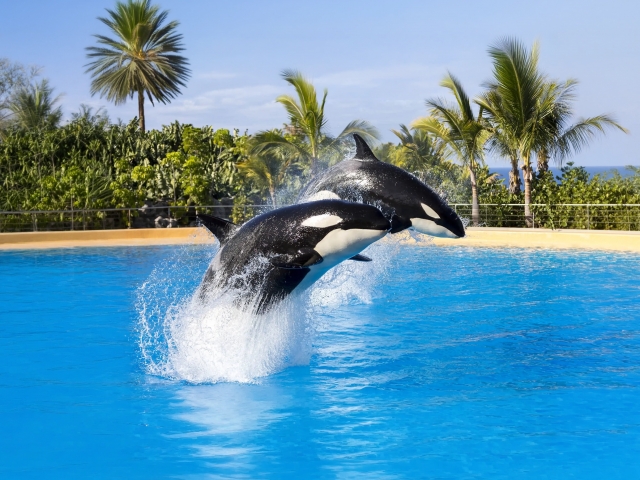
Loro Parque, considerado el mejor zoológico del mundo, no es un zoológico convencional: reúne más de 400 especies animales, un hábitat antártico creado con nieve real, el arrecife de coral más grande fuera del océano y presentaciones de animales mundialmente famosas en una experiencia incomparable de día completo.
 es

 Costa Adeje