Tenerife Weather: Winter, Summer, Rain, Wind and Calima
2026. október 31., szombat, 06:58
They don't call Tenerife the Island of Eternal Spring for nothing: daytime temperatures stay between 20 and 28 °C (68–82 °F) all year round, and you can swim in the ocean even in winter. In this overview, based on our own local experience, we explain what to expect: why it rains in the north but hardly ever in the south, what the trade winds and the calima mean for you, why you can burn even on a cloudy day, and why you should always have a pullover with you.
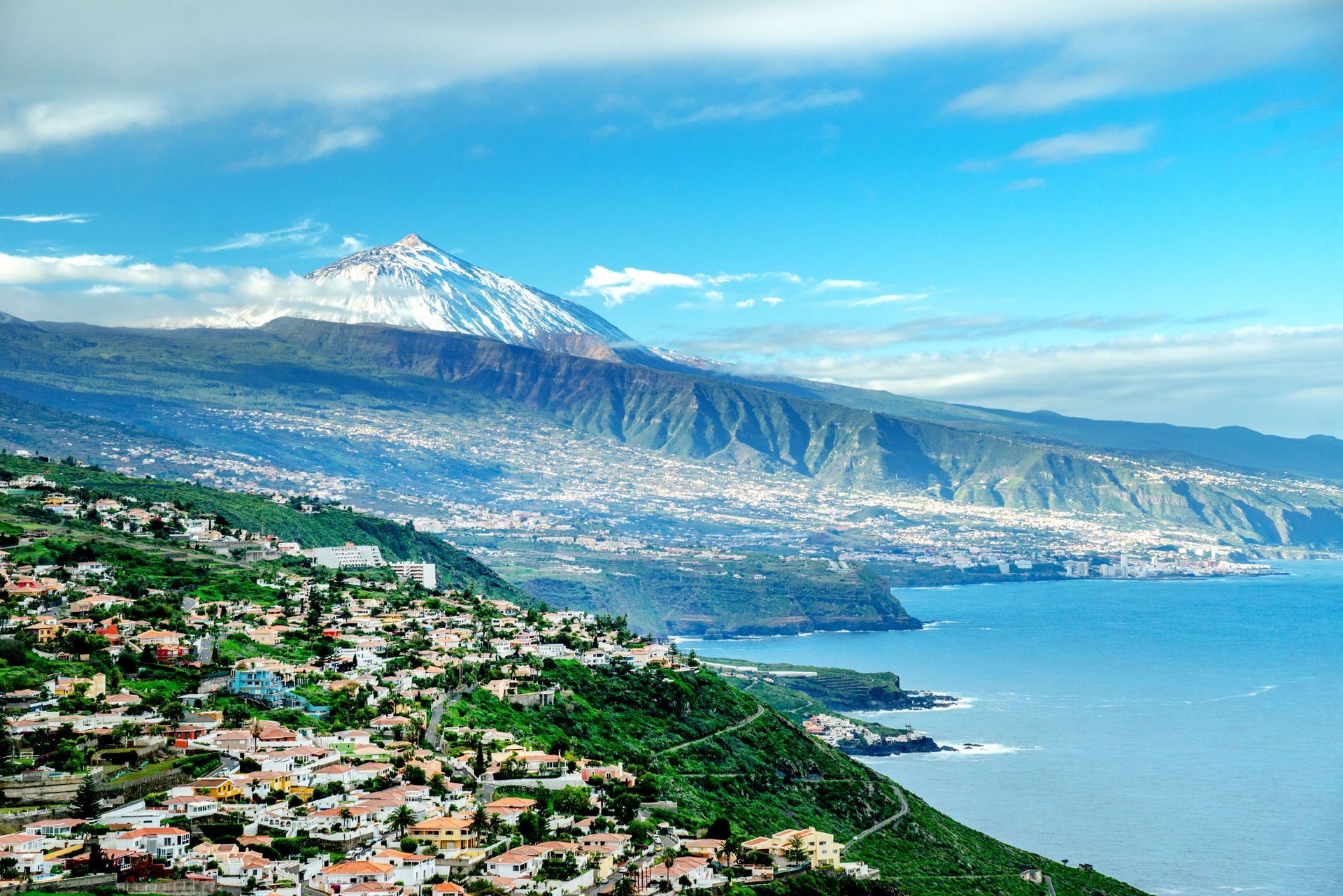
Snow-capped Teide above the north coast, with Puerto de la Cruz and the Orotava Valley in the foreground. The clouds and rain brought by the trade winds keep the north this green, and in winter snow appears on Teide above 2,000 m (6,600 ft).⏐Fotó: Pexels, Atlantic Ambience
The Island of Eternal Spring
"La Isla de la Eterna Primavera" means the Island of Eternal Spring, and Tenerife earned the name: the weather is pleasant all year, with daytime temperatures usually between 20 and 28 °C (68–82 °F). You can swim in the ocean in any season and sunbathe almost any time. If you want to escape the European winter, this is one of the closest and quickest destinations you can choose.
A quick disclaimer: we're not meteorologists. Everything here is based on our own experience living on the island. If you'd like a general introduction to Tenerife, read our overview Tenerife as a Destination: Everything You Need to Know.
A transitional climate on a duck-shaped island
Tenerife is officially in the subtropics, at roughly the same latitude as Florida, and its climate has a lot in common with the coast of Southern California. In practice, though, it has more of a transitional climate, and that comes down to the shape of the island.
Seen from above, Tenerife looks like a duck (that's why we simply call it the "Duck"; we tell its story in this article), one that was shot in the chest with buckshot from close range. The hole in the middle is the ancient Las Cañadas crater, home to two giant volcanoes: Pico Viejo at 3,135 m (10,285 ft) and Teide at 3,715 m (12,188 ft).
The clouds are brought in by the north and north-east trade winds, the same winds that carried the ships of Malocello, Vespucci and Columbus. The clouds get stuck on the higher ground and mostly stay there, so they rarely reach the south. That's why the north has a subtropical Mediterranean climate, while the south is hot and semi-arid to arid. The north is much greener and gets more rain (though still far less than most of Europe), while the south gets almost none. It's no coincidence that the island's main tourist area grew up there.
Microclimates: every town is different
Tenerife is smaller than many counties in Europe, yet it has a huge number of microclimates. Whether it's 20 or 100, nobody knows for sure: we've talked to locals about it a lot, and everyone gives a different answer.
What matters is that you take it into account when choosing where to stay: the weather is a little different in every town. Some places are windier, some get more clouds, some are a bit cooler and others a bit warmer.
The wind
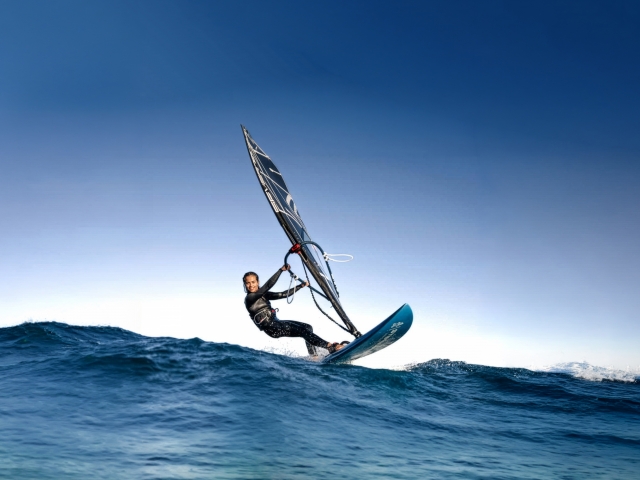
The trade wind blows from the north-north-east, and on the island's south-east coast, roughly around El Médano and the southern airport, there's an acceleration zone where it's noticeably windier. If you book accommodation there, keep that in mind.
Tenerife South Airport (TFS) is in this area too, but the wind hardly affects takeoff and landing: planes almost always get the wind from the front or the back, not from the side, so as a passenger you'll barely notice it. For surfers, on the other hand, this zone is paradise.
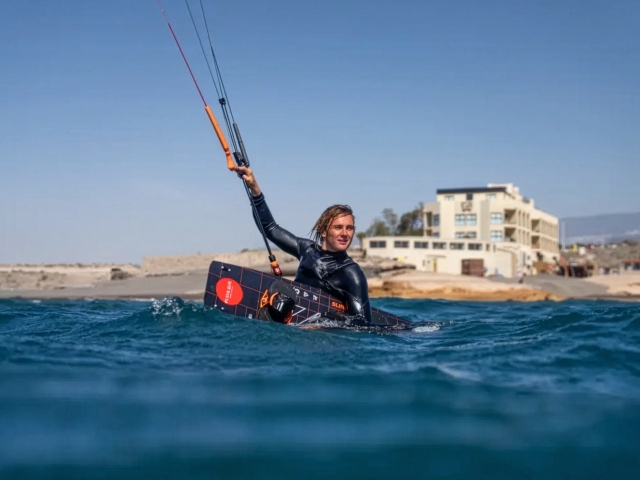
A szél erejét a deszkán állva élheted át, kezdőtől haladó szintig elérhető szörfvitorlás oktatással, teljes felszereléssel és személyre szabott segítséggel, valamint vízen is működő, kétirányú rádiós oktatói kapcsolattal.
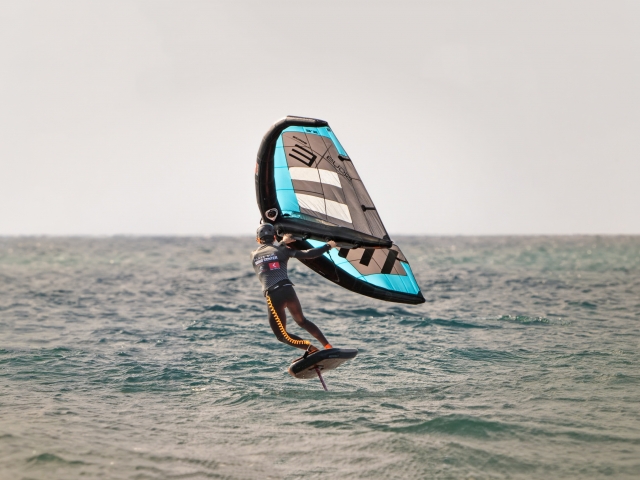
A wing foil különleges szabadságérzetét élheted át - a szél erejét használva tanulhatod meg irányítani a wing-et és fokozatosan elemelni a deszkát az óceán felszínéről, miközben tapasztalt oktató segít az első lépésektől egészen a haladó technikákig.
Two things are worth knowing. First, even when the sky clouds over completely in the south, it doesn't rain, strange as that sounds. You might be on the beach when dark clouds roll in and think the sky is about to fall. It won't: 99% of the time it won't rain.
Second, however overcast it is, you'll still tan, and you can easily burn like a lobster. So even on cloudy days, wear a cap or a hat and use sunscreen. We're not kidding, this is serious.
A spectacular sight: in the Anaga Mountains, the clouds rush over the ridges at tremendous speed. If you're on the island, we warmly recommend a visit to Anaga.
Rain
Around 75% of the rain falls in the north, and even there it rains far less often than in most of Europe. For the island as a whole, the chance of rain in summer is around 0%, and in spring, autumn and winter it barely reaches 20% at most. The wettest month is December, with around 55 mm (2.2 in), but that's for the whole island, and most of it falls on the northern side.
And if a tropical shower does catch you in the north, it's no tragedy: it's 25 °C (77 °F) while it rains, and a poncho is all you'll need.
We kept our own rain calendar for the south last year. There were 4 occasions when the rain really disturbed the peace, and 5 more days when it rained but we barely noticed during the day. That's how much rain you can expect in the south in a whole year. One thing is certain: you don't need to pack an umbrella or a raincoat.
Horizontal rain and the Canary pines
Two unusual phenomena are linked to the island. The first is horizontal rain: the trade wind blows so strongly in the north that it carries raindrops from where it's raining to places where it isn't. You look up, there's not a cloud above you, and yet the raindrops hit your face from the side. It's an amazing experience.
The second is the Canary pine, which typically grows above 800 m (2,600 ft) and has very long needles. When the clouds crash into the mountains and get stuck there, moisture condenses on the needles and drips down into the soil. Later the mountain "spits" this water back out through springs, and down near the coast, farmers use it to irrigate their plantations. It's a generous natural water cycle.
Storms and hurricanes
You don't need to expect classic thunderstorms with thunder and lightning. A hurricane brushes the island roughly once a decade, if at all. The last significant one was in 2005: Tropical Storm Delta mainly hit the northern part of the island, causing floods and damage, but everything was put right within a week or two. A map of every Atlantic storm recorded since 1851 shows that almost all of them have missed the Canary Islands.
The sun: hat, sunscreen, sunglasses
The sun here is very strong. Tenerife is close to the Tropic of Cancer, the sun's rays come in at a very different angle than in Central or Northern Europe, and most visitors simply aren't used to this level of sunlight. So this is our most important tip:
A hat: ideally one with a wide brim.
Sunscreen: good quality, high SPF, and use it regularly, even on cloudy days.
Polarised sunglasses: the light here is much stronger, especially on the oceanfront at sunset, when the glare off the water literally burns your eyes.
The warmest spots in the Canary Islands are the southern parts of Tenerife and Gran Canaria, and Los Gigantes on the south-west coast is one of the sunniest places on the island.
Temperature: don't trust the forecast
The temperature is remarkably stable across the whole island. In much of Europe, swings of 20–25 °C (36–45 °F) within a single day are common; the biggest we've measured here was 12 °C (22 °F), and that already felt almost apocalyptic.
PRO tip: many visitors keep checking the local weather forecast. For Croatia, Italy, France or mainland Spain that's a good strategy, but here it makes little sense. First, because of the microclimates, the weather changes almost from street to street, and you never know which street the weather station is on. Second, it usually feels much warmer than the forecast says: if it says 24 °C (75 °F), the sun blasts you even through the clouds, and it feels far hotter. So it's best to start from this simple premise: the weather is always good. End of story.
January and February are the coolest months, July and August the warmest, but the difference is small. A fun fact: the lowest temperature ever recorded on Tenerife's coast was 8.1 °C (46.6 °F), and that was up north, in Santa Cruz de Tenerife.
Always bring a pullover
This doesn't mean it's cold during the day: on the coast you'll never wear a pullover in the daytime. The mountains are a different story. Above 400 m (1,300 ft) it gets noticeably cooler, and at the top station of the Teide Cable Car the air can drop to around -1 °C (30 °F). Even that isn't the kind of -1 °C that freezes you in a European winter; often you barely notice it. We always wear a pullover when we go up Teide, and we're perfectly fine.
A pullover also comes in handy at dinner: if you like to eat late, around 9 or 10 pm, definitely bring one along.
Snow on Teide
Yes, it does snow on Tenerife: typically in January and February in Teide National Park, from around 2,000 m (6,600 ft). Teide and Pico Viejo turn white, and it's a beautiful sight.
And here's the fun part: you hop in your rental car, drive up the mountain, have a snowball fight, then drive down to the coast, roast in the sun and take a dip in the ocean. If you come in January or February, it's an experience of a lifetime.
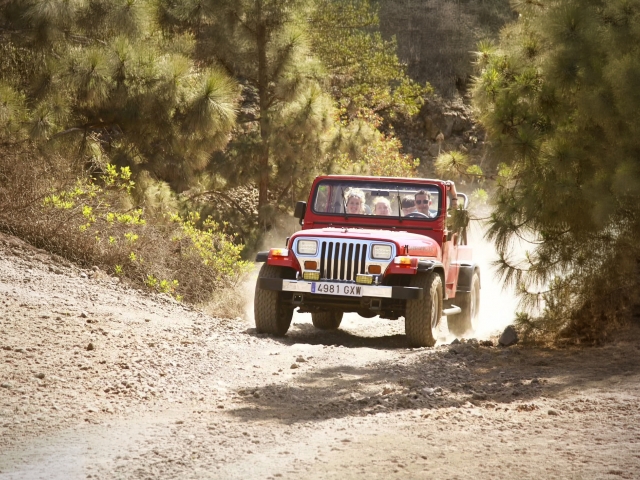
Felvonóval a felső állomásig (3,555 m), majd helyi vezetővel tovább a Teide csúcsára (3,715 m) - Spanyolország legmagasabb pontjára. A legteljesebb vulkánélmény Tenerife-n.
The calima is essentially a warm air mass from Africa that carries fine desert sand from the Sahara. The same phenomenon reaches Europe too: across the Mediterranean, the sirocco wind carries the sand, and in much of Europe it's simply called a warm front. In the Canary Islands, it's called the calima.
It starts in the Sahara and reaches all the way to the middle of the Atlantic. It usually lasts 3 to 5 days, occasionally 2 to 7. During a calima, the sand significantly reduces visibility: usually you can't see further than about 10 km (6 mi), and very rarely only around 100 m (330 ft).
A relaxing beach holiday isn't affected at all. Active tourism can be, though: especially in summer, the heat sometimes leads the authorities to close the island's natural areas (for example Teide, Masca or Anaga) for safety reasons, and you can't enter them during that time. The last really severe calima was in 2020, when even Tenerife's airports were closed because visibility was so poor.
Wildfires
As in Croatia or Greece, wildfires are a normal part of summer here, often caused by the heat a calima brings. In 2023 a major fire swept through Tenerife and burned several thousand hectares of Canary pine forest.
What matters for you is that you don't need to worry about it in the slightest. A fire can't spread to the tourist area, because in the south there's no vegetation that could catch fire: wildfires affect the north and the mountains. If you read headlines about a wildfire raging in Tenerife and people being evacuated, look at it from a tourist's point of view: you don't need to cancel your holiday. The airports aren't affected, and in 2023 most tourists holidaying in the south didn't even know there was a fire, because there was no sign of it there at all.
The ocean: beach weather all year round
The ocean stays between 18 and 24 °C (64–75 °F) all year: coolest in spring, warmest in autumn. Because it's such a huge body of water, it doesn't swing like the Mediterranean, which is practically a garden pond by comparison. We swim regularly in winter too.
To be fair, when you first get in, it feels cold, even though it isn't really that cold. After 5 to 10 minutes you get used to it, and then you don't feel cold at all; in fact the ocean feels warm, and you can easily stay in for half an hour or an hour, winter or summer.
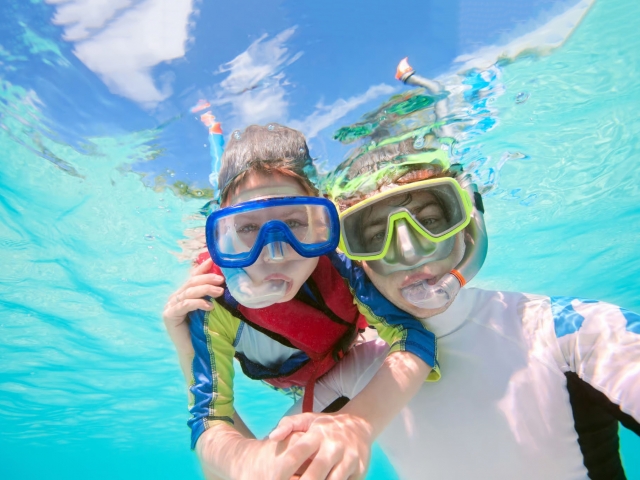
Felszíni búvárkodás a part közelében vagy hajóról, ahol maszkban és békatalppal fedezhetők fel Tenerife vulkanikus képződményei és változatos óceáni élővilága.
So the weather in Tenerife is always good; just don't forget your hat, sunscreen and pullover. It's worth booking your experiences in advance, because the best options sell out: with FINESTPASS™ our local team recommends tried-and-tested tours and activities that you can book securely from home. For more detail, download our free digital travel guides.
Watch the full video too, and subscribe to the channel!
 hu

 El Médano